The Specialization Trap: Why a Master's Degree in Science Might Leave You Unemployable
The Specialization Trap: Why a Master's Degree in Science Might Leave You Unemployable · Avonetics
 PlushDeluxe Bamboo Waterproof Mattress Protector
Bamboo Viscose. SAFEGUARD YOUR INVESTMENT: Keep your expensive mattress in pristine condition with our Premium Queen Bamboo Mattress Protector. Our ultra-soft mattress cover protec…
See it →
PlushDeluxe Bamboo Waterproof Mattress Protector
Bamboo Viscose. SAFEGUARD YOUR INVESTMENT: Keep your expensive mattress in pristine condition with our Premium Queen Bamboo Mattress Protector. Our ultra-soft mattress cover protec…
See it →
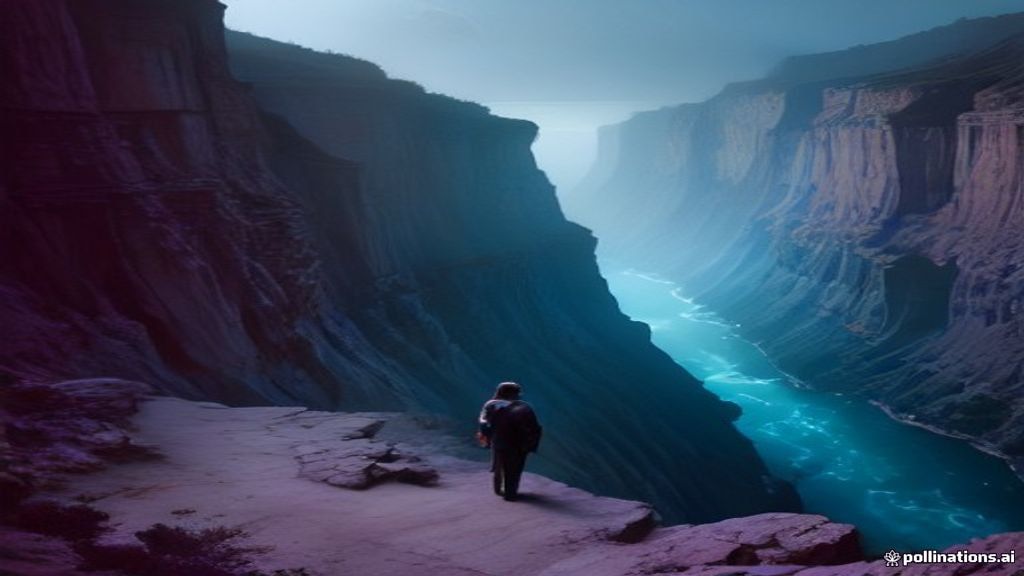
For many, the dream of a career in science is filled with images of heroic fieldwork and groundbreaking laboratory discoveries. But for one researcher, the reality has been a startling contrast between physical danger and professional isolation. Having spent three years mapping the Grand Canyon of the Stikine in British Columbia, they faced sheer 1,500-foot cliffs and violent rapids, only to find themselves trapped in a different kind of canyon upon entering the job market.
The Grand Canyon of the Stikine is a geological wonder, forming at the same time as the Grand Canyon of the Colorado. It cuts through the Canadian Cordillera, showcasing beautiful rock formations where ancient mineral veins have been relocated by faults and cut by new volcanic intrusions. But while the researcher successfully navigated this treacherous landscape, their transition into the world of structural biology proved to be a different kind of hazard.
 Read nextClimbing Cliffs and Career Walls: The High-Stakes Double Life of a Modern Scientist
After completing a Master's degree immediately following their undergraduate studies, the researcher specialized in cryo-electron microscopy (cryo-EM) and enzymology. Their work involved transforming cells in E. coli and purifying proteins using His-tag affinity chromatography. It was highly technical, cutting-edge science. Yet, when they began applying for industry jobs, they met a wall of rejection.
The biotech sector is currently demanding practical, high-throughput skills such as human cell culture, flow cytometry, and immunosorbent assays (ELISA). Unfortunately, these were techniques the researcher's highly specialized academic lab never utilized. With employers increasingly unwilling to invest time or resources into training new hires, the researcher found themselves over-qualified in one narrow area and under-skilled in almost everything else.
This predicament has sparked intense discussion within the scientific community. On one hand, some praise the deep expertise and resilience required to conduct research in extreme environments like the Stikine. One observer called it 'incredible country to work in,' emphasizing the intrinsic value of specialized geological and biological mapping. They argue that such elite skills are rare and should be celebrated.
 Philips B6309 2.1 Channel Soundbar
Experience elevated sound with 2.1 channels with subwoofer & immersive audio tech. Compact wireless subwoofer enriches effects & music. Tailor your sound with 4 EQ modes. Activate…
See it →
Philips B6309 2.1 Channel Soundbar
Experience elevated sound with 2.1 channels with subwoofer & immersive audio tech. Compact wireless subwoofer enriches effects & music. Tailor your sound with 4 EQ modes. Activate…
See it →
On the other hand, pragmatists argue that academia is failing its students by encouraging extreme specialization at the expense of broad, marketable skills. Many principal investigators are hesitant to allow graduates to volunteer in their labs to learn new techniques due to liability and compensation issues, leaving job seekers with no clear way to bridge the skills gap.
This divide highlights a critical flaw in modern scientific training, where the pursuit of academic publication often leaves graduates ill-prepared for the realities of the commercial job market.
Our hosts get into it into this compelling story of extreme fieldwork and career survival on the latest episode of the podcast.