Cosmic Monster or Media Hype? Science World Divided Over Newly Discovered 'Black Hole Star'

Cosmic Monster or Media Hype? Science World Divided Over Newly Discovered 'Black Hole Star' · Avonetics
 Vitamins and Sea Beauty Sea Lavender
HYDRATING SLEEP FACE MASK - A hydration face mask that deeply moisturizes and calms the skin for a balanced, rejuvenated complexion. Let this calming face mask do the work while yo…
See it →
Vitamins and Sea Beauty Sea Lavender
HYDRATING SLEEP FACE MASK - A hydration face mask that deeply moisturizes and calms the skin for a balanced, rejuvenated complexion. Let this calming face mask do the work while yo…
See it →
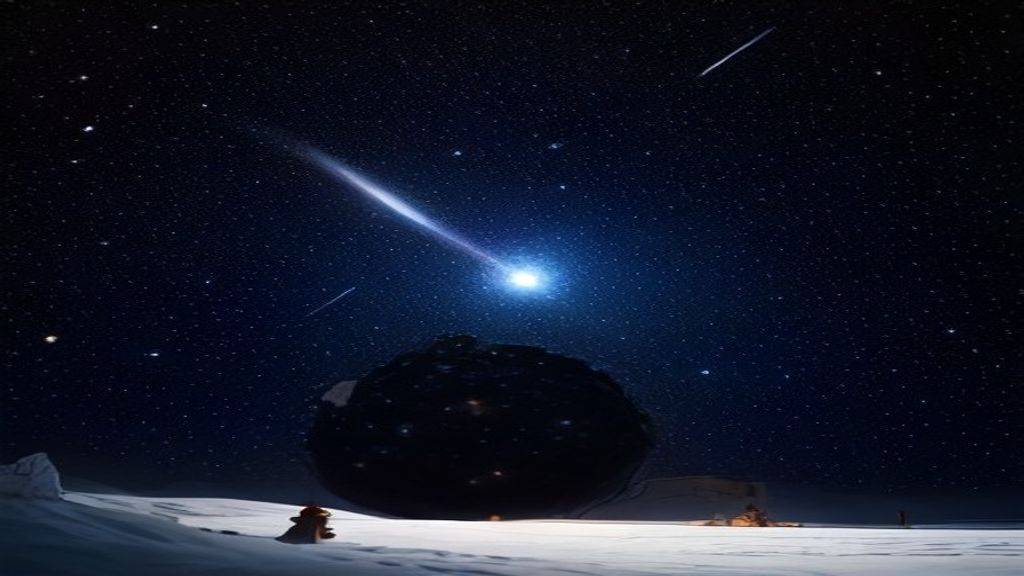
Astronomers looking back to the dawn of time have stumbled upon an object so massive and bright it defies standard cosmic classification. Named MoM-BH*-1, this newly discovered anomaly from the early universe appears externally like a supermassive red star the size of our entire solar system. Yet detailed observations reveal a far stranger reality: it radiates over 100 billion times more energy than standard stars, powered by a central black hole wrapped in blinding shrouds of dense, incandescent gas.
Lead study author Rohan Naidu described the object as a 'one in a billion' phenomenon, offering potential answers to how supermassive black holes grew so quickly in the early universe. But while researchers celebrate the raw data, the public launch of the discovery has triggered an intense row across the stargazing world over media sensationalism.
 Read nextCode, Stars, and Moonlit Scars: Inside the WebGL Rebuild of Asteria and the Viral Andromeda Stacking War
When headlines began proclaiming the arrival of a 'part star, part black hole hybrid,' scientific purists immediately pushed back. Many observers expressed frustration over what they view as sensationalized pop-science spin. One commenter noted that the actual scientific paper is completely captivating on its own, arguing that superheated gas shining brighter than massive stars as it falls into a black hole does not need fictionalized media framing. Another observer pointed out that matter emitting intense light prior to crossing an event horizon has been documented for over two decades, warning that clickbait coverage creates unnecessary public distrust in science.
Meanwhile, pop-culture enthusiasts jumped on the news with classic 90s rock references, invoking Soundgarden’s iconic hit 'Black Hole Sun' and citing theoretical physics videos that have discussed similar 'quasi-star' concepts for years. For this camp, dramatic metaphors and viral memes are not distortions—they are vital doorways that make mind-bending astrophysics accessible to everyday people.
This friction between strict technical accuracy and accessible human connection extends beyond academic papers into the night sky itself. During the 2026 Perseids meteor shower, one astrophotographer decided to abandon their usual dark-sky isolation in pursuit of something more personal. Leaving heavy trackers behind, they set up a basic camera setup at a suburban overlook plagued by Bortle 5 light pollution.
 Waterpik Cordless Gem 5100 Portable Water
Waterpik Cordless Gem helps you maintain healthier gums and cleaner teeth whether you are at home or traveling. It includes 3 tips for a variety of dental needs, including cleaning…
See it →
Waterpik Cordless Gem 5100 Portable Water
Waterpik Cordless Gem helps you maintain healthier gums and cleaner teeth whether you are at home or traveling. It includes 3 tips for a variety of dental needs, including cleaning…
See it →
Despite struggling through hours of tedious post-processing to scrub away ugly artificial skyglow gradients, the photographer captured a breathtaking meteor composite while sitting in the grass surrounded by dozens of cheering locals. The experience served as a powerful reminder that while technical perfection is prized, shared cosmic awe is often found in messy, imperfect conditions.
Whether debating early universe astrophysics or photographing meteors from suburban hillsides, the space community remains locked in a vital conversation about how we connect with the universe.
On the latest episode of Deep Space, the hosts untangle the mind-bending physics of MoM-BH*-1 and debate whether pop-sci hype is helping or hurting our search for cosmic truth.