The Towering Inferno's Cousin: How a Sleek Luxury Skyscraper Turn Into a Real-Life Death Ray

The Towering Inferno's Cousin: How a Sleek Luxury Skyscraper Turn Into a Real-Life Death Ray · Avonetics
It starts as a dazzling, futuristic curve on a rendering screen. A glossy skyscraper bends elegantly toward the sky, sweeping past standard boxy towers to signal wealth, sophistication, and avant-garde design. But once the scaffolding comes down and the sun hits the glass, a nightmare scenario unfolds down on the pavement below.
In recent years, major world capitals have witnessed a bizarre urban phenomenon: concave glass towers operating as accidental, massive parabolic mirrors. Instead of diffusing daylight, these structures collect solar rays across their vast, curved facades and focus them into ultra-intense beams that sweep across neighboring streets like a thermal laser.
 Read nextDEATH RAYS & EXPOSED SKIRTS: Inside the $120 Million Architectural Disaster That's Terrorizing Downtown!
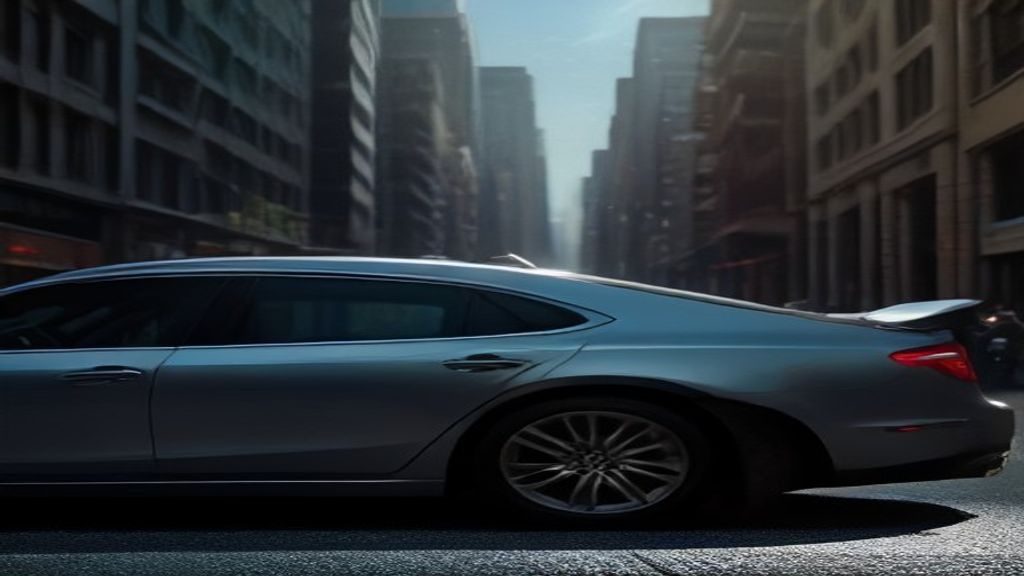
Terrified locals and visitors suddenly find themselves in an unintended physics experiment. On sunny afternoons, temperatures inside the target zone spike to blistering levels. Sidewalks reach heat levels high enough to cook food, while unsuspecting drivers return to their parked cars only to find plastic trim sagging off the doors, badges dripping like hot wax, and side mirrors completely warped.
One local driver recalled stepping up to his luxury sedan after a afternoon meeting, only to discover the entire passenger side blistered and melting. Another nearby business owner described smelling burning rubber inside his shop before noticing a glowing patch of blinding white light searing his front doormat.
Online, photos of melted cars and sidewalk cooking experiments exploded across social platforms. One commenter remarked that human beings spent thousands of years developing civilization just to build a giant magnifying glass over our own parking spots. Another pointed out that any child who ever held a lens in the sun could have predicted the outcome, making it mind-boggling that teams of highly paid architects missed it.
Engineers blame a combination of high-reflectivity glass coatings—meant to save energy inside the building—and parametric design software that historically prioritized internal lighting over what happens to the neighborhood outside. The fix isn't cheap. Structural retrofits, such as installing massive shade fins or anti-glare films over hundreds of windows, often cost developers tens of millions of dollars and permanently alter the building's signature silhouette.
It is a glaring reminder that no matter how visionary an artistic concept looks on a presentation deck, basic physics always wins in the end.
On the latest episode of Bad Blueprint, the hosts pull back the curtain on this architectural nightmare, exploring how high-concept geometry, software blind spots, and corporate ego created the ultimate urban design disaster.