The Pig That Almost Ruined Empire: Inside the Insane 1859 Border War Started by a Hog
The Pig That Almost Ruined Empire: Inside the Insane 1859 Border War Started by a Hog · Avonetics
It is June 1859, and a solitary black Berkshire boar is enjoying an unauthorized feast of fresh potatoes on San Juan Island. The pig belongs to an Irish employee of the British Hudson's Bay Company. The potatoes belong to Lyman Cutlar, a hot-tempered American settler who has had quite enough of local livestock treating his garden like a buffet.
Cutlar raises his rifle, aims, and pulls the trigger. The hog drops dead. It is the first and only shot fired in what is about to become one of the most absurd military standoffs in human history.
 Read nextThe Great Blue Mystery: Why Ancient Greeks Described the Sea as 'Wine-Dark'
When the British pig owner demands a staggering one hundred dollars in damages, Cutlar offers ten. When negotiations collapse, Cutlar famously snaps that the pig was eating his potatoes. The Briton counters with equal venom, declaring that it was Cutlar's duty to keep his potatoes out of the pig. British authorities immediately threaten Cutlar with arrest and trial in Victoria.
Fearing imperial overreach, American settlers appeal to the US Army for protection. Enter Brigadier General William Harney, an aggressive anti-British officer who sees an opportunity to stake a claim. He dispatches sixty-six infantrymen under the command of Captain George Pickett—the very same officer who would later lead the disastrous Confederate charge at Gettysburg.
Pickett lands on the island, digs artillery trenches, and issues a grandiose decree claiming full American control. His aggressive posturing infuriates James Douglas, the Governor of Vancouver Island. Douglas promptly dispatches three Royal Navy warships carrying hundreds of armed men with orders to disembark and dismantle the American camp.
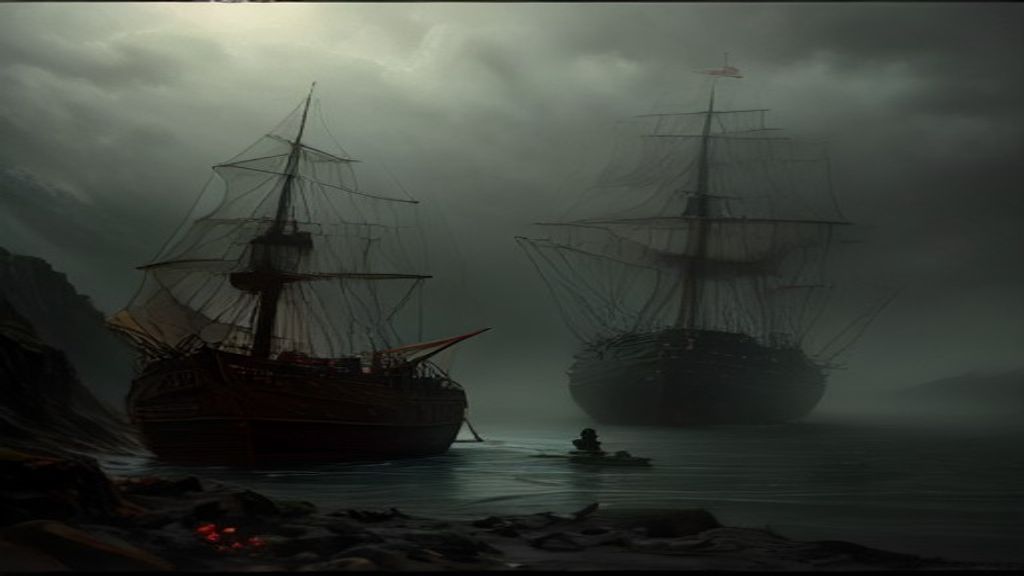
By August, the misty shores of San Juan Island resemble a gunpowder keg waiting for a match. Pickett boasts that his forces will make a violent stand, vowing to fight to the death against any British landing force. On the water, five British warships carrying over two thousand men and seventy heavy naval cannons face off against four hundred American soldiers fortified behind earthworks.
One twitchy trigger finger could trigger a global military conflict between two nuclear-era precursors. Yet, total catastrophe is averted by a surprising burst of military common sense.
Rear Admiral Robert L. Baynes, commander of the British Pacific Station, arrives on the scene aboard his flagship. Governor Douglas orders him to land the Royal Marines immediately and clear the island. Baynes flatly refuses.
Informally confiding to his officers, Baynes remarks that he will not involve two great nations in an international war over a petty squabble about a pig. He explicitly orders his naval officers to maintain a strict defensive stance and refuse to fire unless fired upon first.
When news of the escalating showdown reaches Washington D.C. and London, leaders on both sides of the Atlantic are dumbfounded. Neither US President James Buchanan nor British Prime Minister Lord Palmerston wants a bloody war over a Pacific Northwest island. President Buchanan dispatches veteran diplomat General Winfield Scott to cool temperatures.
Scott and Douglas broker a sensible compromise: both nations will jointly occupy the island with small, equal garrisons until a formal international boundary can be agreed upon. For the next twelve years, American soldiers and British Royal Marines live on opposite sides of the island in total peace, hosting joint athletic contests and drinking toasts to each other's national holidays.
The standoff finally ends in 1872, when German Emperor Kaiser Wilhelm I acts as an independent arbitrator and formally awards San Juan Island to the United States based on treaty geography.
One commenter noted that the entire standoff proved that cooler heads in the field are often smarter than local politicians. Another argued that if Pickett had shown that same impulse toward dramatic posturing in 1863, American history might look very different.
Our podcast hosts unpack every hilarious, high-stakes moment of this forgotten border battle on the latest episode.