The Country Club Nightmare: Why You Freeze on Easy Balls (and Sprint for Hard Ones)
The Country Club Nightmare: Why You Freeze on Easy Balls (and Sprint for Hard Ones) · Avonetics
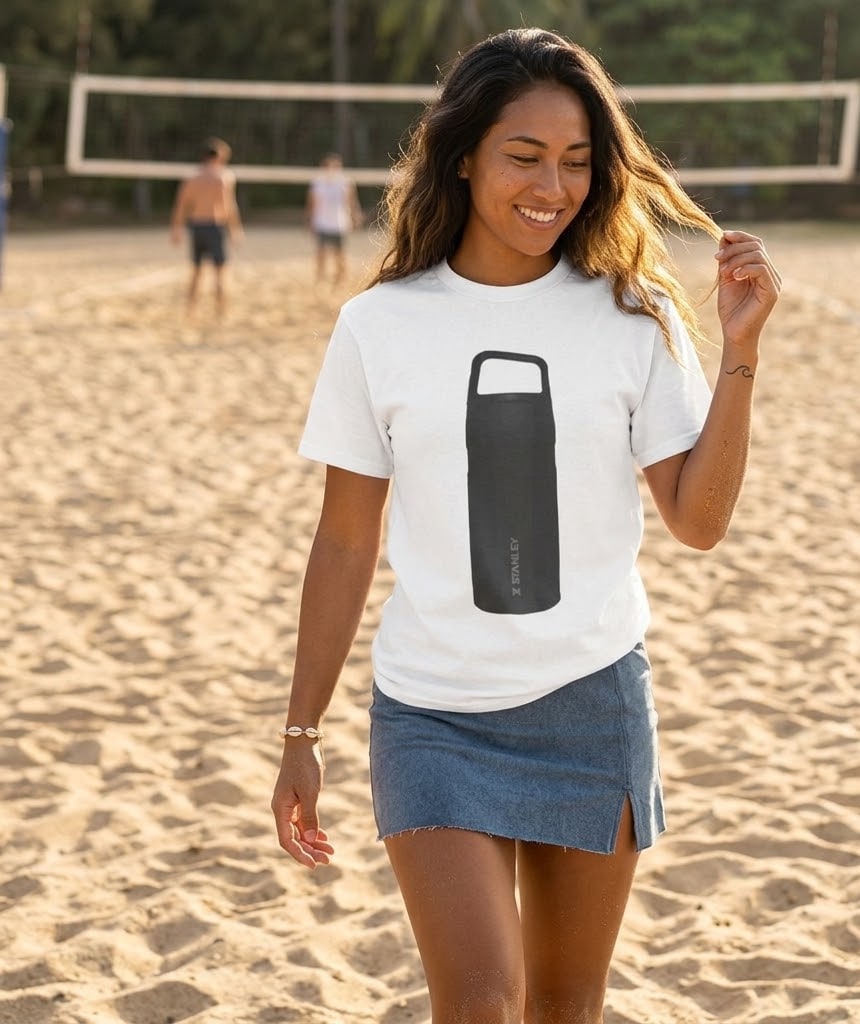 STANLEY IceFlow Bottle
Insulation: Keeps drinks cold for 8 hours and iced for 40 hours
See it →
STANLEY IceFlow Bottle
Insulation: Keeps drinks cold for 8 hours and iced for 40 hours
See it →
There is a silent killer lurking in recreational tennis leagues across the country, and it does not come in the form of a 120 mph serve or a razor-sharp drop shot. It arrives as a slow, floaty, utterly harmless ball that bounces short in no man's land.
For thousands of competitive weekend players, this ball is pure poison. While players will sprint out of their shoes to pull off dramatic, sliding, down-the-line passing shots on deep crosscourt drives, they freeze like statues the moment an easy, slow ball approaches. They stand flat-footed, watch the ball bounce lower than expected, and jam themselves into an atrocious unforced error into the net tape. Worst of all? They walk off the court after losing a three-set heartbreaker without even breaking a sweat, holding a full tank of unused physical energy.
 Read next'The Demo Lied to Me': How a £250 Tennis Racket Turned into an Arm-Wrecking Trap
So why does the brain allow us to run like lightning for hard shots while turning our legs to concrete on the easy ones?
Within competitive player circles, a heated debate has broken out over how to fix this infuriating habit.
One camp of technical purists insists that lazy footwork on slow balls is a mechanical failure that cannot be cured during league play. They argue that when a ball lacks pace, the brain struggles to calculate timing, causing the feet to stop automatically. Their solution is rigorous, repetitive structure off the court. One long-time competitor suggested forcing yourself to strike every incoming ball at the absolute top of its bounce. By targeting the ball at or above net height, you eliminate the need for heavy topspin lifting, enlarge your target area, and physically force your feet to move forward into the court before the ball drops.
Others recommend starting every practice session with ten minutes of short-court mini-tennis to force rapid foot adjustments, or using visual modeling—watching footwork footage of junior prodigies and tour stars to internalize hyper-active leg movement.
 Toshiba Mini Rice Cooker
Multi-Function - This mini rice cooker cooks a variety of dishes, not just rice. Features 8 cooking functions, including White Rice, Quick Cook, Brown Rice, Mixed Grain, Slow Cook…
See it →
Toshiba Mini Rice Cooker
Multi-Function - This mini rice cooker cooks a variety of dishes, not just rice. Features 8 cooking functions, including White Rice, Quick Cook, Brown Rice, Mixed Grain, Slow Cook…
See it →
However, tactical realists strongly disagree with the drill-first mentality. They argue that if a player is already capable of pulling off high-speed hero shots on the run, their physical footwork mechanics are perfectly fine. The real culprit is a sudden crash in mental focus and energy during low-threat moments.
Another seasoned player offered a surprisingly simple experiment: pre-match caffeine. They argued that if a cup of espresso before a match eliminates slow-ball laziness, the issue isn't footwork technique at all—it is baseline neurological arousal. Other players advocate for psychological trigger words, such as repeating rhythmic footwork chants or visualizing top-tier tour players right before a point begins to jumpstart active split-stepping.
Whether the cure lies in boring repetitive drills or a double shot of espresso, one thing is certain: leaving the court with unused energy while dropping points to floaty balls is the ultimate unforced error.
The hosts of Unforced Error tackle this exact court drama on this week's episode, debating whether lazy feet are a technical flaw or a mental trap.
 Simple Modern Water Bottle with Straw
The Simple Modern Ascent is a 24oz stainless steel water bottle with a narrow mouth straw lid - a slim profile that's easy to slide into backpack side pockets and bags.. DOUBLE WAL…
See it →
Simple Modern Water Bottle with Straw
The Simple Modern Ascent is a 24oz stainless steel water bottle with a narrow mouth straw lid - a slim profile that's easy to slide into backpack side pockets and bags.. DOUBLE WAL…
See it →