Fake Reviews, Secret Flaws, and 5.0 Drama: Inside the Wild Battle Over High-Tech Tennis Ball Machines
Fake Reviews, Secret Flaws, and 5.0 Drama: Inside the Wild Battle Over High-Tech Tennis Ball Machines · Avonetics
 Sony WH-1000XM5 headphones
Whether you work in a noisy office or travel often, Sony WH-1000XM5 headphones deliver outstanding noise cancellation and exceptional comfort. They are ideal for anyone who wants to stay focused or enjoy rich, detailed audio anywhere. Check out the link in the episode description.
Learn more →
Sony WH-1000XM5 headphones
Whether you work in a noisy office or travel often, Sony WH-1000XM5 headphones deliver outstanding noise cancellation and exceptional comfort. They are ideal for anyone who wants to stay focused or enjoy rich, detailed audio anywhere. Check out the link in the episode description.
Learn more →
There is a dirty open secret inside upper-level recreational tennis: plenty of 5.0 players are walking around with a completely broken backhand wing. For years, athleticism, aggressive forehands, and tactical footwork can mask a major technical gap. But once you step onto the court against seasoned tournament veterans, the party is over. Smart opponents target weak backhands with ruthless precision.
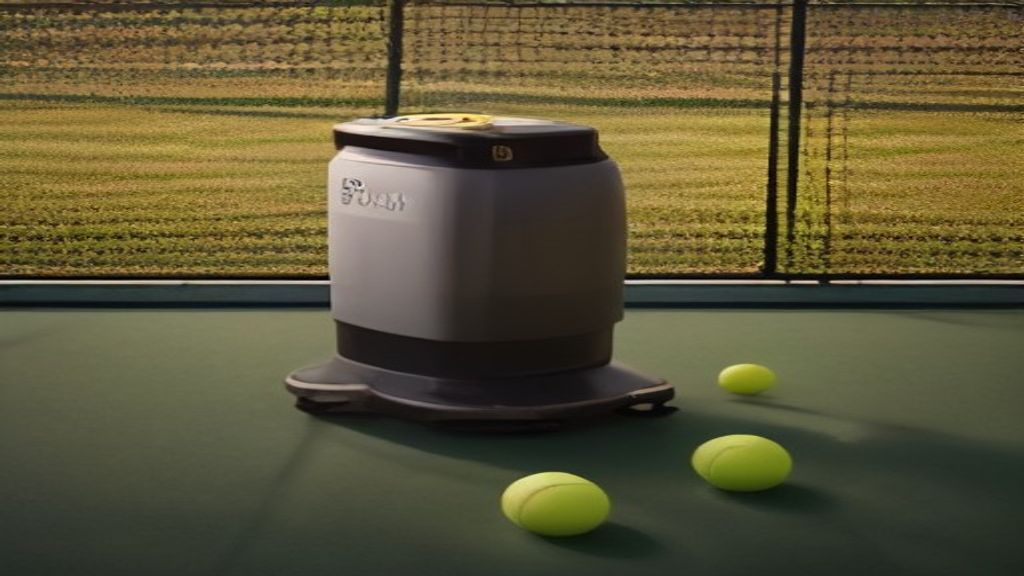
For one local competitor desperate to save their ranking, the solution seemed obvious: spend lunch breaks grinding out hundreds of repetitions using a personal tennis ball machine. But stepping into the market for practice equipment in 2024 is like entering a digital wild west.
 Read next'The Demo Lied to Me': How a £250 Tennis Racket Turned into an Arm-Wrecking Trap
The industry is currently locked in a fierce war between legacy heavyweights and a new wave of smart, app-driven devices. Brands like Pongbot, Tenniix, and Hydrogen Proton are making bold claims, promising sleek portable designs, Apple Watch control, and customizable shot patterns. However, prospective buyers are finding it increasingly difficult to filter out legitimate player feedback from a sea of suspected automated marketing and paid promotional hype.
Among actual court veterans, opinions are sharply divided. One camper who logged over 45,000 balls on a Hydrogen Proton praised its compact, paper-shredder-sized frame and tool-battery integration, arguing that painless portability is the single biggest factor in actually using a machine regularly. Another player noted that smart net-post sensors on machines like the Pongbot Pace S Pro produce heavy, realistic top-spin that traditional feeders simply cannot match.
Yet traditionalists remain deeply skeptical. Owners of classic tanks like the Lobster Elite point out that heavy-duty metal machines are built to survive seasons of outdoor abuse. Spare parts for legacy brands are easily ordered online, whereas high-tech startups face unproven track records for long-term repairs and software maintenance. If an app stops receiving updates or a digital sensor snaps, an expensive high-tech feeder quickly turns into an unusable court decoration.
Your brand, right here.Reach story-obsessed listeners in 45+ languages → advertise on AvoneticsMeanwhile, the pro tour presented its own stark lesson in endurance and tactical execution at the WTA 500 in Monterrey. Croatian star Donna Vekić suffered a devastating first-round exit at the hands of France’s Diane Parry, losing 6-7(5), 6-4, 6-1. The loss marks Vekić’s fifth consecutive defeat—a painful streak where she won the first set in every single match before unraveling.
After grinding out a tight first-set tiebreak against Parry, Vekić suffered an early break in the second set and visibly struggled with hip discomfort and stamina in the third. As Vekić resorted to high-risk baseline slapping to shorten rallies, Parry capitalized with low-margin defensive slices, forcing errors to complete the comeback.
On this week's episode of Unforced Error, our hosts break down the high-tech gear debate and debate how Vekić can fix her mid-match collapses.