Lab Drama Unleashed: Veteran Scientist’s 50-Year Stem Cell Claim Sparks Fiery Online Backlash!

Lab Drama Unleashed: Veteran Scientist’s 50-Year Stem Cell Claim Sparks Fiery Online Backlash! · Avonetics
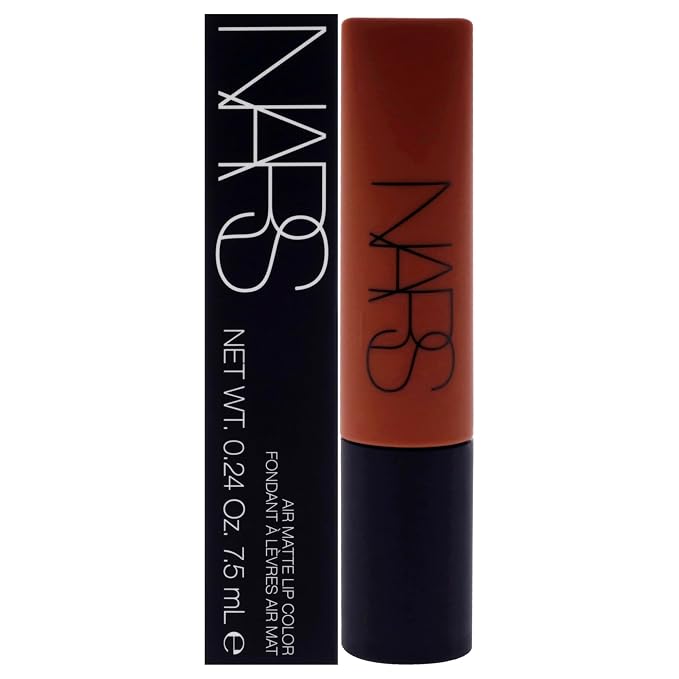 NARS Air Matte Lip Color
A matte that moves with you. Cushiony,air-kissed pigments float onto lips,while Color Diffusion Complex creates a soft-focus finish with a creamy feel. Build to perfection with a c…
See it →
NARS Air Matte Lip Color
A matte that moves with you. Cushiony,air-kissed pigments float onto lips,while Color Diffusion Complex creates a soft-focus finish with a creamy feel. Build to perfection with a c…
See it →
A decades-long scientific saga is exploding into public view as a veteran researcher issues a rare and direct plea for laboratory collaboration—only to trigger swift pushback from the wider scientific community.
Dr. Henry E. Young, a veteran PhD researcher, first reported identifying what he terms adult telomerase-positive stem cells back in 1975. At the time, he was studying the extraordinary limb regeneration capabilities of adult terrestrial salamanders of the genus Ambystoma. He later reported isolating the exact same cell population in adult humans, claiming these cells hold immense biological potential.
 Read nextThe Great Lab Exodus: When Academic Mentorship Turns Into Unpaid Therapy
However, Dr. Young emphasizes that these stem cells demand highly specific processing and specialized culture conditions. These protocols differ significantly from standard methodologies used in modern stem cell facilities. Rather than letting alternative laboratory methods take over, he is urging researchers to follow his original isolation procedures to the letter. To assist, he is offering direct remote guidance to any principal investigator willing to attempt an independent validation.
The response from the life science community was swift and polarizing. Within hours of his call for independent replication, digital editors moved to delete the main reference article on adult telomerase-positive stem cells. The deletion proposal pointed out that nearly all publications on the subject originate from a single author, are featured in dubious journals, and lack any independent verification across almost fifty years of research.
Reactions to the controversy remain sharply divided across research circles. One commenter noted that funding for validation studies is notoriously difficult to secure in modern academia, leaving independent researchers with few avenues to test unorthodox claims. Another observer argued that relying on single-author publications in questionable journals is a major red flag, emphasizing that true scientific breakthroughs must stand on clear, independently verified evidence rather than personal coaching.
While the bench science community wrestles with protocols and peer review, a completely different biological riddle is puzzling genetics enthusiasts. A martial artist born to dark and medium brown-eyed, right-handed parents has sparked intense curiosity after displaying hazel eyes with sectoral heterochromia—a rare condition where part of the iris displays a distinct color—and a dominant left-handed stance.
In martial arts training, this individual performs right-handed techniques awkwardly, comparing the movement to a classic cartoon, while left-handed execution comes naturally and flawlessly. Despite a family tree dominated by right-handed individuals and brown eyes, only a grandfather with amber eyes and an ambidextrous aunt hint at hidden genetic diversity.
 Dyson Airwrap i.d.™ Multi-Styler
Program your perfect curls. App enabled for one-touch, personalized styling.. Engineered for straight and wavy hair.. 6-in-1 style versatility. Dry, curl, wave, shape and smooth wi…
See it →
Dyson Airwrap i.d.™ Multi-Styler
Program your perfect curls. App enabled for one-touch, personalized styling.. Engineered for straight and wavy hair.. 6-in-1 style versatility. Dry, curl, wave, shape and smooth wi…
See it →
Genetics experts point out that physical inheritance rarely follows the simplified models taught in introductory textbooks. Complex visual traits like hazel eyes and sectoral heterochromia often stem from polygenic interactions and subtle variations in melanin distribution within the iris, while hand dominance involves complex neural pathways and recessive polygenic combinations. In some cases, localized somatic mutations occurring early in embryonic development can create striking physical variations that seem to appear out of thin air.
Dr. Young's open call highlights a growing tension within modern research culture: the balance between traditional peer review and direct scientific outreach. In an era where institutional funding heavily favors high-impact, established paradigms, unconventional theories often struggle to find a laboratory willing to invest time and resources into verification.
Simultaneously, the personal genetics story demonstrates how unpredictable human biology can be when recessive traits and subtle developmental factors align. Whether analyzing cellular longevity or the origin of a multi-colored iris, researchers and science enthusiasts alike are forced to confront the limits of current knowledge.
From high-stakes laboratory disputes over stem cell reproducibility to the fascinating quirks of personal genetic inheritance, the life sciences continue to prove that nature and research are full of surprises.
Our hosts dissect both of these fascinating cases and deliver their final verdict on the latest episode of Culture Shock!