Is Your Ego Hardwired or Built? Inside the Online Spiritual War Over Buddhist Psychology
Is Your Ego Hardwired or Built? Inside the Online Spiritual War Over Buddhist Psychology · Avonetics
 PDRN NAD+ Serum Mist
DEEPER HYDRATION & 4D HYALURONATES — Experience deep, lasting hydration beyond basic face moisturizer. This spray serum features a complete multi-molecular hyaluronates system(dive…
See it →
PDRN NAD+ Serum Mist
DEEPER HYDRATION & 4D HYALURONATES — Experience deep, lasting hydration beyond basic face moisturizer. This spray serum features a complete multi-molecular hyaluronates system(dive…
See it →
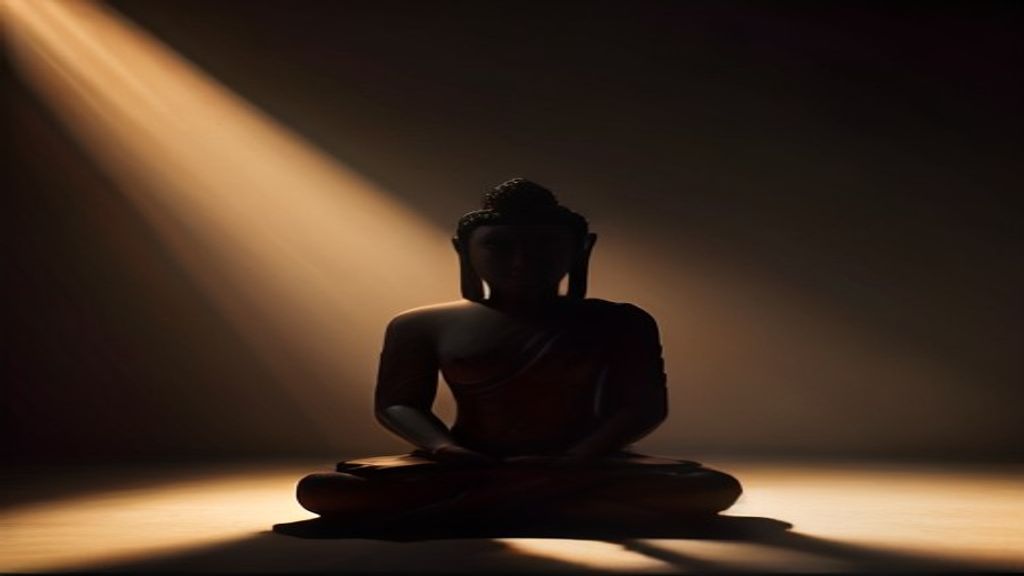
Inside modern spiritual centers and online seeker circles, a fierce debate is erupting over the very nature of who we are. It started when a practitioner shared a striking lesson from their local meditation group: the idea that human identity is entirely constructed by shifting external causes and conditions. According to this view, our sense of 'I' is built on three simple streams: sense impressions, judgments, and actions. Because these three elements change constantly, the person you were five minutes ago before reading a book or breaking a fingernail no longer exists.
To many, this concept of No-Self is a liberating revelation. It suggests that no past mistake or personality flaw is permanent, because the self is being rewritten every second. But for others, this radical emphasis on environmental 'nurture' feels deeply out of touch with modern science and classical tradition alike.
 Read nextThe Invisible Bridge: How a 1,400-Year-Old Zen Paradox Can Calm Your Anxious Mind
Critics were quick to point out that this framework seems to completely erase human biology and genetics. One practitioner argued that the teacher's explanation was fundamentally incomplete, failing to account for the five aggregates that comprise body and mind. They emphasized that our physical brain possesses traits, preferences, and proclivities programmed by billions of years of evolutionary DNA. To pretend we arrive as blank slates shaped only by immediate impressions ignores the hardwired reality of our physical bodies.
Another commenter brought ancient scriptures into the mix, noting that historical texts explicitly mention natural elements and innate inclinations. According to this perspective, early spiritual psychology never denied that human beings are born with distinct inherent dispositions; rather, it acknowledged nature and nurture working together as complex conditions.
As the debate deepened, practitioners turned to classic Zen literature to break the conceptual deadlock. Passages from the ancient master Foyan were brought forward, reminding seekers that the moment one tries to illuminate truth with endless intellectual arguments, reality becomes darkened. Foyan urged practitioners to abandon intellectual posturing and simply do the direct work—whether through silent sitting or mindful observation in daily life.
 Bloomeffects
An innovative whipped butter-like balm that melts into a lightweight, non-greasy nourishing oil. Powered with mineral active, non-nano Zinc Oxide to deliver Broad Spectrum SPF 50 p…
See it →
Bloomeffects
An innovative whipped butter-like balm that melts into a lightweight, non-greasy nourishing oil. Powered with mineral active, non-nano Zinc Oxide to deliver Broad Spectrum SPF 50 p…
See it →
This call for direct practice sparked a second front in the debate: the rise of performative spirituality. Modern seekers expressed frustration with self-proclaimed spiritual leaders who adopt titles and practices without doing the fundamental legwork, reading core texts, or committing to silent retreats. One commentator noted that while gatekeeping can become an ego trap, expecting spiritual practitioners to have a foundational study of their craft is simple common sense.
Ultimately, the confrontation highlights a growing divide among modern practitioners: those who view spirituality as an abstract conceptual puzzle versus those who insist on grounded, biological reality and daily meditative practice.
Our hosts tackle both sides of this mind-bending debate on the latest episode of Unattached.
 Hisense 65" E7 Cinema Series Hi-QLED
Hi-QLED MiniLED: Mini-LED backlighting uses thousands of precise light zones to enhance contrast across the screen, revealing deeper shadows, brighter highlights, and more visible…
See it →
Hisense 65" E7 Cinema Series Hi-QLED
Hi-QLED MiniLED: Mini-LED backlighting uses thousands of precise light zones to enhance contrast across the screen, revealing deeper shadows, brighter highlights, and more visible…
See it →