From Ancient Sandalwood Statues to Quivering Eyelids: The Modern Battle to Tame Restless Energy
From Ancient Sandalwood Statues to Quivering Eyelids: The Modern Battle to Tame Restless Energy · Avonetics
 MAREE Dark Spot Remover for Face
Dark Spot Corrector for Face & Body – Lightweight, hydroquinone-free MAREE serum helps improve the look of black & brown spots, melasma-prone areas, freckles, and uneven tone for a…
See it →
MAREE Dark Spot Remover for Face
Dark Spot Corrector for Face & Body – Lightweight, hydroquinone-free MAREE serum helps improve the look of black & brown spots, melasma-prone areas, freckles, and uneven tone for a…
See it →
In the 7th century, Tibetan King Songtsen Gampo looked across the vast, chaotic Himalayas and saw something terrifying: the entire landscape was shaped like a giant supine demoness lying on her back, her wild limbs throwing the region into spiritual disarray. To anchor peace across his realm, the king embarked on a monumental architectural and spiritual mission. He ordered the construction of 108 demon-subduing temples, placing Lhasa at the very center.
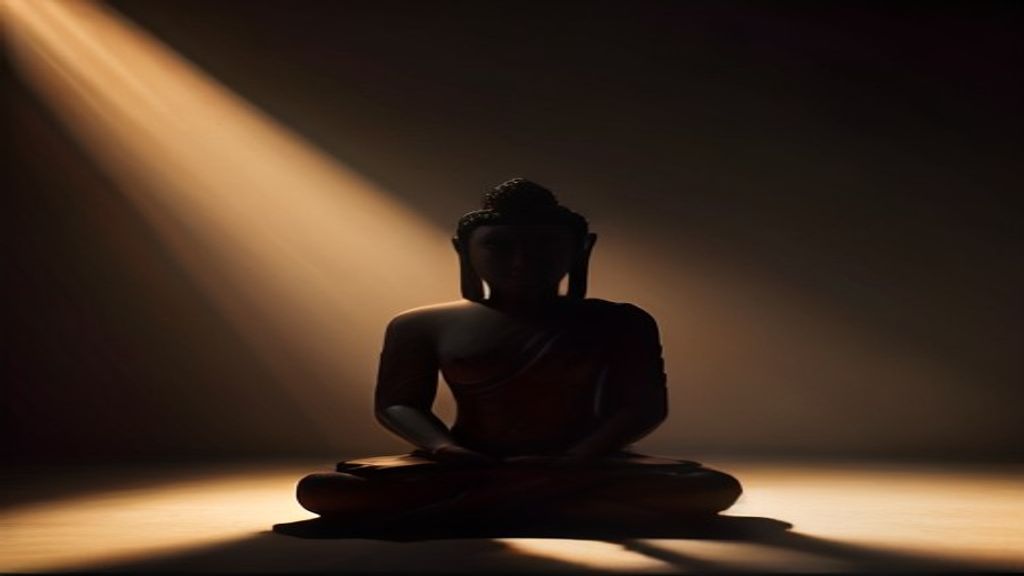
To inhabit these sacred halls, legend says three miraculous sandalwood trees were discovered. From these trees, master artisans carved magnificent figures of Avalokiteshvara—the embodiment of noble compassion. Most famous among these were the Four Phagpa Brothers, larger-than-life sculptures installed from Lhasa to Kathmandu. These physical anchors were designed to transform chaotic regional energy into divine order.
 Read nextThe Invisible Bridge: How a 1,400-Year-Old Zen Paradox Can Calm Your Anxious Mind
Centuries later, modern spiritual seekers are discovering that the battle against wild, chaotic energy is no longer fought across mountain ranges. Instead, it is fought in quiet rooms, right behind tightly closed eyelids.
A growing number of daily meditators report hitting an unexpected physical roadblock during silent practice. Rather than encountering blissful tranquility, they find themselves locked in a frustrating struggle with their own facial muscles.
One practitioner recently described a peculiar obstacle that hijacked their practice: every single time they close their eyes to sit in stillness, their eyelids begin to twitch violently, their eyes involuntarily cross, and their facial muscles lock into intense strain.
The root cause turned out to be a deeply ingrained physical habit. For years, their primary trick for falling asleep had been to force their eyes inward, aggressively focusing on the dark void behind their eyelids to shut out racing thoughts. Now, whenever they sit down to meditate, their brain automatically activates that exact same defensive, high-tension muscle memory.
This frustrating experience highlights a classic dilemma in modern practice: how do you train the body to relax when your physical default is set to strain?
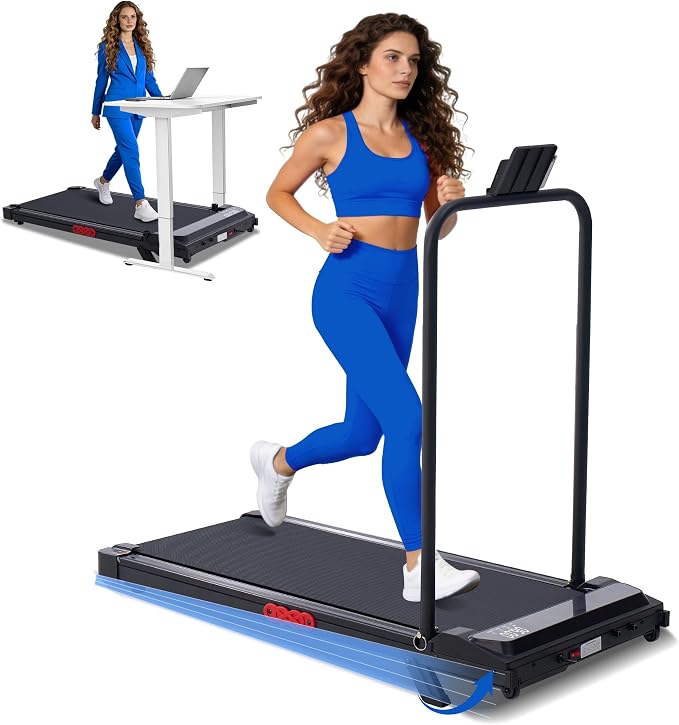 Portable Walking Pad Treadmill with Incline
【SUOUER Model V300-YD8 Treadmill for Home Exercising】Step up from entry-level gear to an experience that truly inspires. When you step onto this commercial-grade luxury runner, wor…
See it →
Portable Walking Pad Treadmill with Incline
【SUOUER Model V300-YD8 Treadmill for Home Exercising】Step up from entry-level gear to an experience that truly inspires. When you step onto this commercial-grade luxury runner, wor…
See it →
The seeker community quickly split into two distinct schools of thought over how to resolve somatic tension during sitting.
The first school champions gentle surrender and symbolic adjustment. One commenter argued that eye twitching is merely the physical body releasing stored stress and mental friction. Trying to force your eyes to stand still, they noted, only adds a second layer of judgment and tension over the initial sensation. Another suggested imitating the soft, half-open downward gaze found in classical Himalayan statues, allowing light in to disarm the sleep-association mechanism.
The second school advocates for sharp, direct behavioral interventions. One contributor pointed out that conditioned reflexes will not simply fade through passive observation. They suggested actively rewiring the brain's habit loop by moving the mental anchor far away from the head—focusing instead on the rising and falling of the abdomen or using open-eye focus techniques until the old eye-crossing triggers are erased.
Ultimately, whether a seeker chooses to softly embrace quivering eyelids or actively re-condition their nervous system, the underlying goal remains identical to King Songtsen Gampo's ancient blueprint: transforming chaotic internal friction into an enduring sanctuary of stillness.
The hosts of Unattached dig into this exact debate, arguing whether we should surrender to bodily friction or actively retrain our physical habits on this week's podcast episode.
 NutriChef Electric Pressure Cooker 6 Quart
VERSATILE PRESSURE COOKER FUNCTIONALITY - Experience efficient multi-cooking with 9 pressure cooker preset modes. Easily cook, bake, steam, roast, broil, and braise with precision…
See it →
NutriChef Electric Pressure Cooker 6 Quart
VERSATILE PRESSURE COOKER FUNCTIONALITY - Experience efficient multi-cooking with 9 pressure cooker preset modes. Easily cook, bake, steam, roast, broil, and braise with precision…
See it →