Is 'Alif Laila' Truly Indian? The Mind-Bending Cultural Debate Captivating Lore Enthusiasts
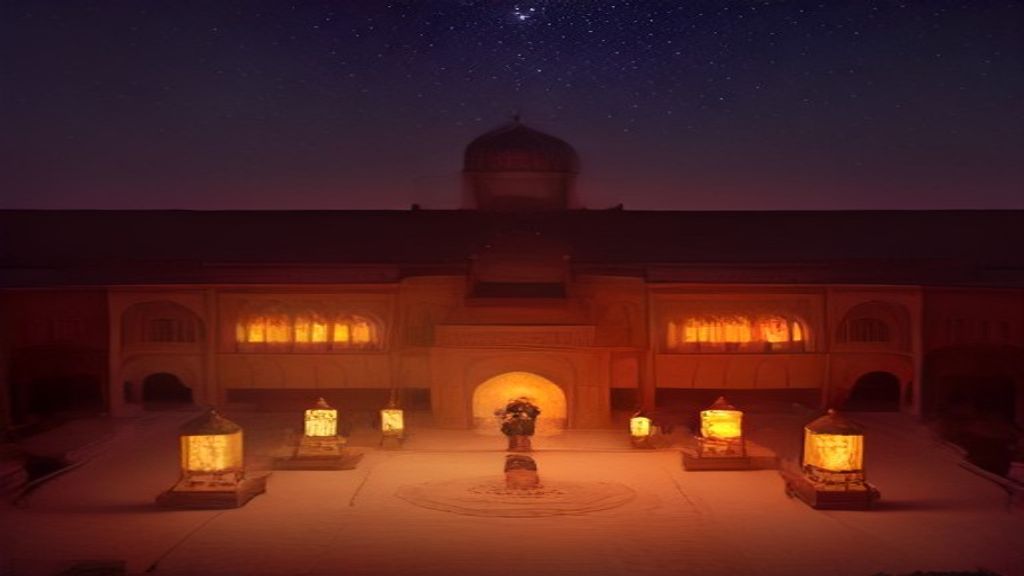
Is 'Alif Laila' Truly Indian? The Mind-Bending Cultural Debate Captivating Lore Enthusiasts · Avonetics
Across the vast landscape of global mythology and epic folklore, few questions spark as much quiet fascination as how neighboring cultures digest each other's ancient stories. In East Asia, the legendary Chinese saga Journey to the West enjoys massive, enduring popularity in South Korea. Yet despite centuries of shared literary tradition and endless pop-culture adaptations featuring the Monkey King, Korean audiences view the epic as undeniably Chinese. The civilizational line between native history and foreign folklore remains crystal clear and uncrossed.
In North India, however, a far more intricate cultural equation emerges when examining Alif Laila—the celebrated collection of Middle Eastern tales universally known as One Thousand and One Nights. When Hindi and Urdu speakers encounter the enchanting worlds of Aladdin, Ali Baba, royal viziers, flying carpets, and mysterious jinns, what is their immediate internal reaction? Do they experience these narratives as an exotic Arabian fantasy from across the sea, or do they feel a deep, quiet sense of cultural kinship forged through centuries of Indo-Persian historical synthesis?
 Read nextHero or Villain? The Internet Is Raging Over Mahabharata’s Most Tragic Warrior
The core of this debate rests upon the deep historical interactions that shaped the northern regions of the Indian subcontinent. The rise of Hindustani as a vibrant linguistic bridge, the flourishing of courtly Urdu literature, and the architecture and aesthetic rhythms of the Mughal era created a unique cultural landscape. For millions of people across North India, words like jinn, vizier, sultan, tehzeeb, and kissa are not foreign vocabulary; they are organic components of daily speech used in the bustling streets of Delhi, Lucknow, Jaipur, and Varanasi.
One commenter points out that the iconic 1990s television adaptation of Alif Laila, produced by Sagar Arts in India, permanently altered how these classical stories are remembered across the subcontinent. By utilizing local Indian actors, Hindustani dialogue, Indian dramatic tropes, and traditional musical scales, the show localized Arabian mythology for generations of families. For those who spent their childhood evenings gathered around television sets, these tales feel intimately bound to regional nostalgia and Indian broadcast history rather than distant foreign soil.
Another perspective highlights the traditional art of dastangoi—the complex Urdu art of oral storytelling that flourished in North Indian courtly centers. Through dastangoi, Persian and Arabian romances were actively retold, expanded, localized, and performed before Indian audiences for centuries. Proponents of this view argue that this long process of artistic naturalization turned Arabian fantasy into a legitimate, living branch of North Indian folk tradition.
Yet a powerful counter-argument asserts that linguistic familiarity must never be confused with actual civilizational origin. Many observers argue that North Indians maintain a sharp, conscious distinction between indigenous spiritual sagas—such as the sacred epics of the Ramayana and Mahabharata—and the Middle Eastern lore of Alif Laila. They emphasize that while the Hindustani language renders the dialogue familiar, the physical settings of Baghdad, Basra, and Cairo, along with the distinct theological foundations, remain unmistakably foreign.
One commentator argues that adopting loanwords or enjoying a televised fantasy series does not transform foreign folklore into native heritage. From this viewpoint, for the majority of non-Muslim North Indians, the tales of Scheherazade function as enchanting fairytales from distant Islamic lands, operating in almost exact parallel to how South Koreans perceive Journey to the West.
This fascinating dynamic highlights the unique duality of North Indian identity, where centuries of Persianate synthesis coexist alongside ancient Vedic traditions. Whether Alif Laila is viewed as a naturalized cousin of Indian folklore or an exotic import from Arabian deserts, its enduring presence in the Indian consciousness remains undisputed.
Our hosts unpack both sides of this rich cultural and historical crossroads on the latest episode of Sacred Fire.