THE QUANTUM REFORM: Physicists Battle Over the True Foundations of Reality and Thermal Equilibrium
THE QUANTUM REFORM: Physicists Battle Over the True Foundations of Reality and Thermal Equilibrium · Avonetics
 Apple EarPods Headphones
Ergonomically Designed for Superior Comfort – Unlike traditional circular earbuds, these EarPods are crafted to fit the natural shape of the ear, providing a secure and comfortable…
See it →
Apple EarPods Headphones
Ergonomically Designed for Superior Comfort – Unlike traditional circular earbuds, these EarPods are crafted to fit the natural shape of the ear, providing a secure and comfortable…
See it →
Late at night in theoretical physics departments across the globe, a fundamental tension is brewing. It starts with a breathtakingly clean mathematical truth: when a physical potential is perfectly symmetric, the energy operator—the Hamiltonian—and the spatial parity operator commute. In the formal shorthand of quantum mechanics, [H, P] = 0.
This simple zero carries massive physical implications. It guarantees that a system can possess precise energy and precise spatial symmetry simultaneously. For a brief moment, the restrictive grip of Heisenberg's uncertainty principle vanishes. You can measure both values with absolute, unambiguous certainty.
 Read nextPhysicists Test Mind-Bending Paradox in Lab — And Objective Reality Might Be Broken
Yet, the moment physicists attempt to write this reality on a blackboard, the room splits into opposing factions over the very language of science. One camp insists on using classical spatial integrals, maintaining that explicit calculus offers tangible geometric intuition about where a particle actually exists in space.
"Calculus integrals force you to see the actual shape of the wavefunction," one researcher argued during recent foundational debates. "Abstract matrix algebra hides the physical geometry of the world behind convenient symbols."
Their opponents argue that sticking to classical calculus is a dead end for modern quantum discovery. Dirac's abstract bra-ket notation, which treats physical states as vectors in high-dimensional spaces, is essential for describing phenomena like particle spin and building quantum computers where spatial coordinates simply do not exist.
"When dealing with particle spin or quantum information, integral methods are completely inaccessible," another physicist noted. "Abstract operator algebra is the only framework that provides a clear, intuitive path into graduate-level quantum mechanics."
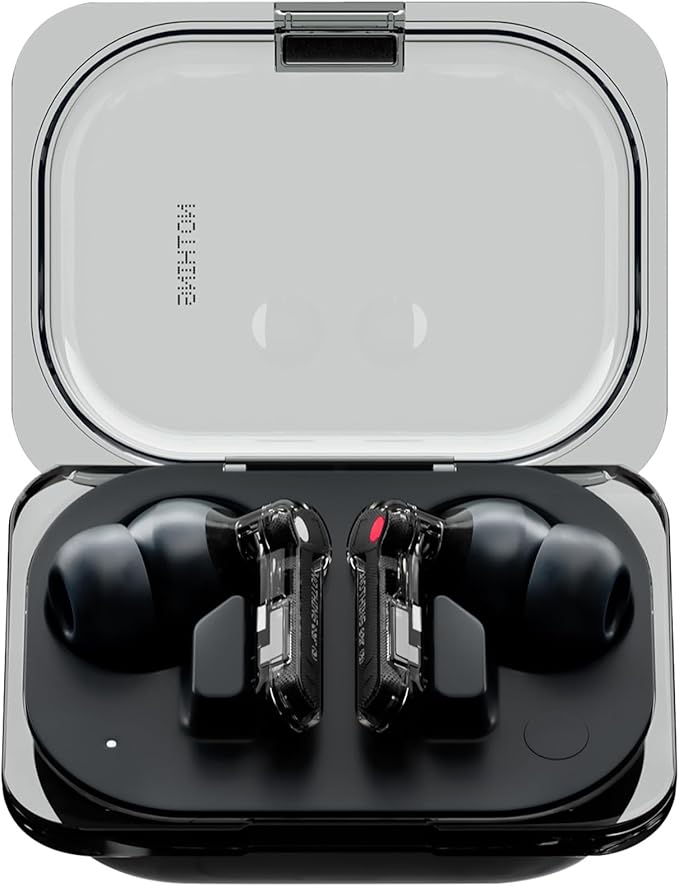 Nothing Ear
Powerful 11 mm Driver: We've engineered an even more compact driver that delivers twice the power of Ear (2). In Nothing Ear (a) wireless earbuds, this means deeper, more impactful…
See it →
Nothing Ear
Powerful 11 mm Driver: We've engineered an even more compact driver that delivers twice the power of Ear (2). In Nothing Ear (a) wireless earbuds, this means deeper, more impactful…
See it →
This philosophical divide cuts even deeper when moving from individual particles to the vast collections of matter studied in statistical mechanics. For generations, textbook thermodynamics has relied on the microcanonical distribution—the baseline assumption that all accessible microscopic states of an isolated system are equally likely. But critical thinkers are questioning whether this cornerstone assumption is actually proven, or merely a convenient mathematical trick.
In classical physics, researchers leaned on the ergodic hypothesis, assuming a system eventually visits every possible state over time. In quantum mechanics, that assumption crumbles, forcing modern theorists to invent concepts like the Eigenstate Thermalization Hypothesis. ETH suggests that small sub-systems appear thermalized because they are deeply entangled with the larger system around them.
Critical voices challenge this modern consensus, pointing out that ETH often feels like an artificial postulate tailored to justify old assumptions rather than a proven law derived from first principles. Science is left standing at a crossroad: are our sophisticated equations revealing the underlying architecture of nature, or merely disguising the limits of human understanding?
Our podcast hosts take this high-stakes intellectual battle straight to the microphone in this week's episode.
 Bose Ultra Open Bluetooth Earbuds
Designed for complete openness to your surroundings. OpenAudio technology for rich, private sound without blocking your ear. Comfortable, all-day wear. Light-as-air-grip that won't…
See it →
Bose Ultra Open Bluetooth Earbuds
Designed for complete openness to your surroundings. OpenAudio technology for rich, private sound without blocking your ear. Comfortable, all-day wear. Light-as-air-grip that won't…
See it →