Presidential Imposter?! Tiny Cessna 150 Rocks Air Force One Paint Job – Is It Legal?
Presidential Imposter?! Tiny Cessna 150 Rocks Air Force One Paint Job – Is It Legal? · Avonetics
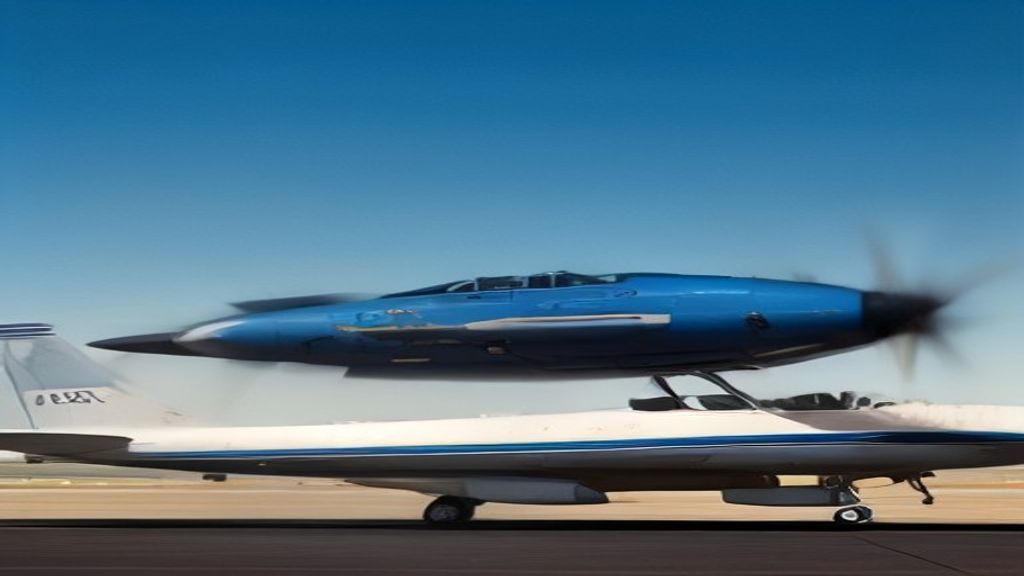
A curious sight has captured the attention of aviation communities: a humble Cessna 150 single-engine aircraft boldly adorned with the unmistakable livery of Air Force One, including what appears to be the authentic Presidential Seal. The image of this miniature presidential imposter has circulated widely, sparking both amusement and a lively debate about its legality.
At the heart of the discussion is whether such a unique paint scheme is permissible under aviation law, or if it could create complications for its owner. While many find the concept humorous and clearly a parody, the presence of the Presidential Seal raises questions about federal regulations and the use of official insignia.
 Read nextHe Said He Was 'Willing and Able.' He Also Had a Cane and a Brand-New Knee.
One commenter quickly pointed out a key technicality: "Technically, it's only Air Force 1 when the POTUS is on it." This perspective suggests that the paint scheme alone, without the actual presence of the President, doesn't legally constitute the official Air Force One aircraft.
Another individual offered a more detailed legal analysis, arguing there are "no legal issue here." They elaborated that on the civil aviation side, regulations primarily focus on the proper display of the aircraft's N-number (registration) rather than its aesthetic paint scheme. They also highlighted the clear visual distinction, stating, "anyone who has trouble distinguishing between a 150 and a 747/VC-25a has no business being within 5 miles of an airport anyway!" This camp believes the parody is self-evident and poses no legitimate risk of confusion.
However, the initial query itself reflects an underlying concern about potential "headaches" for an owner. While no one explicitly stated it was illegal, the use of a "VC-25A livery" (the military designation for the Boeing 747s used as Air Force One) and the Presidential Seal could theoretically draw attention from federal agencies responsible for protecting such symbols.
For most, the sight of the mini Air Force One is simply "quite nice" and a testament to a pilot's creativity and sense of humor. Yet, the conversation underscores the nuanced line between artistic expression and official representation, especially when symbols of national importance are involved.
This high-flying debate is exactly what our hosts dig into on the podcast, dissecting the legalities and the sheer audacity of this unique aircraft.
Transition: From a plane that looks presidential, let’s talk about a helicopter that truly made history. Today marks 40 years since the Westland Lynx AH.1, G-LYNX, broke the absolute world helicopter speed record, hitting an incredible 400.87 km/h (249.09 mph)—a record that remains unbroken to this day.
This wasn't just any helicopter; it was a specially modified machine, a marvel of British engineering. The modifications were extensive, transforming an already capable aircraft into a speed demon. Key enhancements included the addition of water methanol injection to its specially rated Gem 60 engines, and an uprated Westland WG 30 main gearbox to handle the increased power. Aft exhaust jet pipes were installed, along with the tailplane and offset vertical fins from a WG 30 prototype, specifically designed to counteract the colossal torque generated by the powerful engines.
Beyond the power upgrades, the airframe itself underwent a meticulous clean-up and sealing process to minimize every possible ounce of drag. However, the single most critical innovation was the installation of an early set of BERP (British Experimental Rotor Programme) main rotor blades. This unique design utilized composite materials to sculpt the blade profile, allowing the rotor to produce significantly more lift and power than conventional blades.
The BERP blades featured a distinctive swept 'paddle' tip. This ingenious design worked by slowing down the local airflow at the blade tips, effectively keeping the speed below Mach 1. This was crucial because it prevented the build-up of airflow turbulence that normally destroys aerodynamic lift at higher speeds, which is what typically caps a helicopter's maximum velocity. The BERP blade concept was so successful that it is now standard on both the Lynx and EH101 helicopters.
Following these comprehensive modifications, G-LYNX was reflown on August 1st, 1986. After several rigorous trial runs, the actual record attempt took place on August 11th over a measured 15 km (9-mile) route between Hartlake Bridge and West Huntspill. On that day, the G-LYNX etched its name into aviation history, setting a record that has stood for four decades, a testament to the ingenuity and daring of its designers and pilots. It remains a symbol of pushing the boundaries of what rotary-wing aircraft can achieve.