Locker Room Meltdown: Parent Claims Specialty Hockey Socks Shredded 12-Year-Old's Heels
Locker Room Meltdown: Parent Claims Specialty Hockey Socks Shredded 12-Year-Old's Heels · Avonetics
Selecting the right skate configuration for a growing young athlete remains one of the most stressful challenges in youth sports. Balancing comfort, performance, and physical growth often leads parents to make mid-season equipment adjustments that carry unexpected and painful consequences.
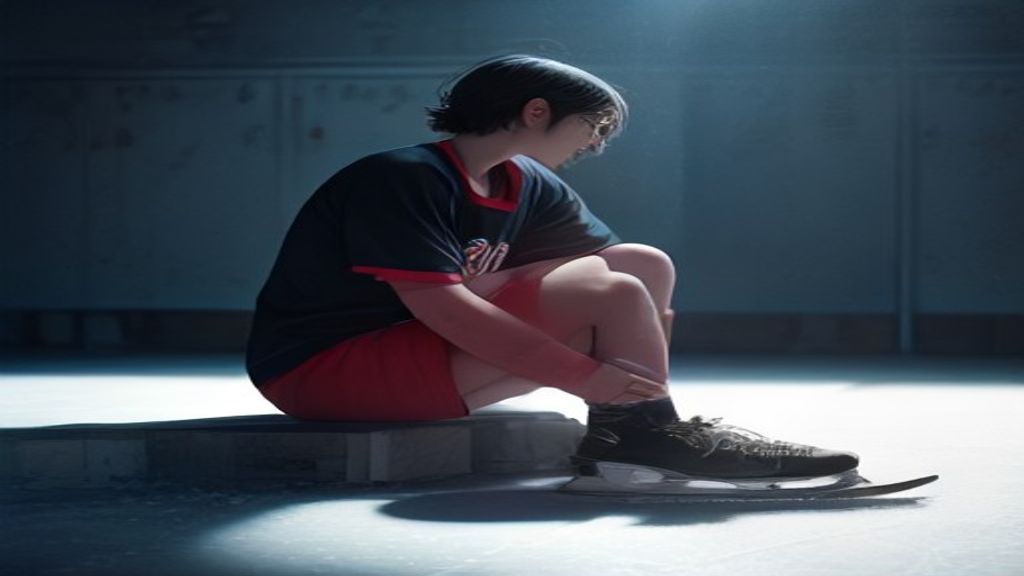
A twelve-year-old hockey player recently stepped off the ice after a grueling two-hour training session, visibly limping and holding back tears. When his parent removed his right skate on the locker room bench, the sight was alarming: a massive, bloody blister covered his heel, accompanied by a raw hot spot on his left foot.
 Read nextDRAMA ON THE ICE: Goalie Smashes Stick and QUITS Mid-Finals—Then the 52-Year-Old Zamboni Driver Does the Impossible!
The young skater had endured an entire hour of intense ice drills in excruciating pain simply because he refused to leave the ice early or miss a single shift.
The saga began weeks earlier during a mid-July equipment fitting. Store technicians measured the boy as a size 5.5 Fit 1. However, due to uncomfortable pressure across the top of his foot near the toes, the fitter opted to size him up to a size 6 Fit 1 Bauer Vapor Velocity skate. The boots were heat-baked in store, fitted with waxed laces, and upgraded with Superfeet insoles.
Initial ice sessions revealed a sharp, painful pressure point on his right instep bone. To fix the issue, a local sports shop punched out the troublesome spots on both skates.
Following the modification, the young skater logged eleven painless ice sessions totaling over ten hours. The custom-punched boots appeared to fit perfectly with no signs of heel movement, chafing, or discomfort.
Everything changed during a Monday morning camp session when the skater tried a new piece of gear for the first time: a pair of high-performance Gear Halo hockey socks. Previously, he had skated exclusively in standard, thick cotton store-bought socks.
While the first hour of practice went smoothly, the second hour brought rapid friction. As the skater pushed through drills, his heels began sliding up and down inside the boots, ultimately tearing away layers of skin.
With the family living in an isolated city hours away from the original skate shop, returning the skates was impossible. A local pro shop manager reviewed the situation and placed the blame entirely on the sock change rather than skate fitting.
The incident has sparked a fierce debate among hockey parents and equipment technicians over skate volume, sock density, and youth gear adjustments.
One camp argues that ultra-thin performance socks are the sole cause of the injury. Modern hockey skates rely on precise internal volume to maintain heel lock. When a boot is heat-baked and punched while wearing thick cotton socks, the internal shell conforms to that specific foot-and-sock combination. Replacing thick cotton with paper-thin technical fabric leaves extra space inside the boot, allowing the foot to float and rub against the heel counter.
Commenters supporting this view emphasize that even a millimeter of unexpected space creates severe friction during high-speed skating. Equipment experts recommend sticking to consistent sock thickness and using moleskin padding on raw heels while the skin regenerates.
The opposing camp blames the fundamental skate fitting decisions made before the sock switch occurred. Skeptics point out that sizing up a twelve-year-old from a 5.5 to a size 6 creates inherent volume problems around the heel cup.
Furthermore, punching out the ankle and instep area weakens the structural wrap of the skate boot. Critics argue that as the internal padding broke in over ten hours of ice time, the heel lock deteriorated. In their view, the ultra-thin socks did not cause the slippage—they merely exposed an oversized skate that was already losing its grip.
Equipment specialists warn parents to exercise extreme caution when modifying new skates or switching performance gear mid-season.
The hosts of Sin Bin dissect this fiery locker room dilemma on the latest episode of the podcast, breaking down the technical science of skate fit versus performance socks.