Inside the Ultimate Logic Club: Five Intellectuals, One Syllabus, and a War Over Gödel

Inside the Ultimate Logic Club: Five Intellectuals, One Syllabus, and a War Over Gödel · Avonetics
 Amazon Basics Hypoallergenic Cotton Rounds
Cotton rounds (100-count). 100% cotton and hypoallergenic. Soft and gentle for baby's skin. Strong for all skin and nail care needs. Good for removing makeup and nail polish and fo…
See it →
Amazon Basics Hypoallergenic Cotton Rounds
Cotton rounds (100-count). 100% cotton and hypoallergenic. Soft and gentle for baby's skin. Strong for all skin and nail care needs. Good for removing makeup and nail polish and fo…
See it →
Imagine assembling a monthly brain trust in your living room. On one side of the sofa sits a doctorate holder in the Philosophy of Mathematics. On the other sits a seasoned software engineer who spends their day analyzing data pipelines. Next to them is a philosophy major who spent the last seven months self-studying formal model theory, and a computer science graduate who specializes in symbolic logic.
This isn't the setup for a joke—it is the real-life membership of an ambitious new self-study group dedicated to mastering Mathematical Logic. But before the group could even hold its second meeting, they ran headfirst into a massive structural dilemma: How do you build a single reading list that challenges a PhD without terrifying a practical engineer?
 Read nextThe 2,000-Page Logic Monster, a Zero-Code Promise, and the Battle Over Math's Purest Truths
The group's founder, a philosophy major ten years out of school, initially proposed starting with Computability Theory. The logic seemed rock solid. Computability sits at the exact intersection of philosophy, mathematics, and computer science. By focusing on Turing machines and algorithm theory, the software engineers and computer science graduates would instantly feel at home, while the philosophers could feast on the foundational questions of what human minds can actually compute.
Textbooks like Cutland’s "Computability" or Epstein & Carnielli’s beginner-friendly volume were put forward as ideal middle grounds. By starting with concrete state tables rather than dense formal proofs, every member could contribute equally regardless of their formal background.
However, as soon as the proposed syllabus hit online logic circles, a fierce debate erupted among veteran mathematicians and self-taught logicians.
One camp strongly backed the computability route, arguing that adult study groups almost always die from friction and asymmetric confidence. As one observer noted, engineers might possess immense general mathematical maturity, but jumping straight into abstract logical machinery can lead to rapid burnout. Building confidence through computability offers an egalitarian ramp that keeps the group together for the long haul.
But a vocal counter-faction argued for a far more radical approach: throw out the warm-up texts and launch straight into Gödel’s Incompleteness Theorems.
 The Ordinary Glycolic Acid 7% Exfoliating
Smoothes skin texture, visibly evens tone, and enhances luminosity with daily use.. POWERED BY 7% GLYCOLIC ACID: Promotes more even looking skin tone, reduces the appearance of lin…
See it →
The Ordinary Glycolic Acid 7% Exfoliating
Smoothes skin texture, visibly evens tone, and enhances luminosity with daily use.. POWERED BY 7% GLYCOLIC ACID: Promotes more even looking skin tone, reduces the appearance of lin…
See it →
Proponents of the Gödel-first strategy argued that adults meeting once a month aren't looking for a slow-burn undergraduate sequence. They want intellectual lightning. Gödel’s Incompleteness Theorems represent one of the absolute peaks of human thought—on par with general relativity or quantum mechanics. To capture the imagination of high-caliber thinkers, critics argued, you have to aim for the stars immediately.
To bridge the difficulty gap, advocates recommended turning to the work of Raymond Smullyan. Smullyan famously redesigned Gödel’s proofs into accessible, puzzle-based frameworks that replace tedious mechanical notation with elegant logical paradoxes. By pairing Smullyan’s puzzles with foundational context from Epstein and Carnielli, the group could experience pure intellectual awe without getting bogged down in administrative math.
Whether this ambitious group decides to play it safe with computability or gamble on Gödel, their debate highlights the fascinating challenge of lifelong learning: balancing the patience required for real technical mastery against the hunger for mind-bending revelation.
Our hosts battle out both sides of this curriculum showdown on the latest episode of Proof Positive.
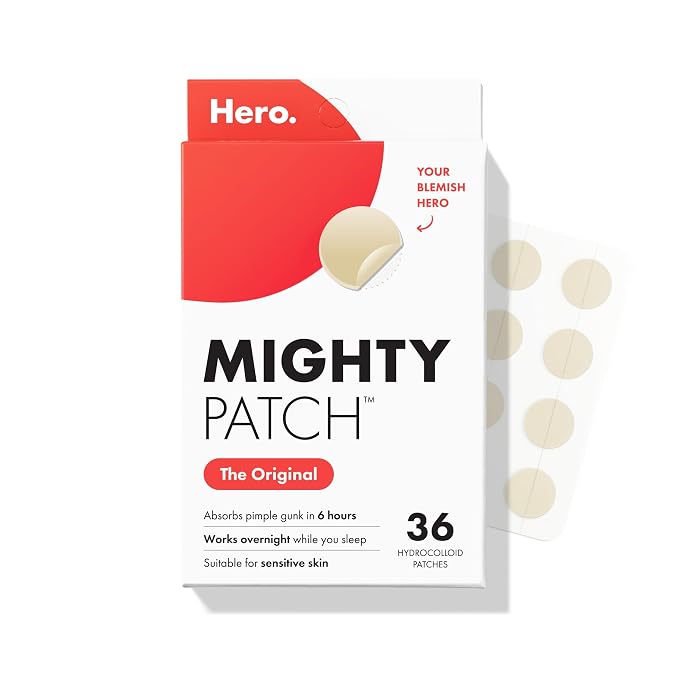 Mighty Patch Hero Cosmetics Original Nighttime
THE ORIGINAL AWARD-WINNING ACNE PATCH. Mighty Patch is a hydrocolloid sticker that visibly flattens pimples overnight. No popping necessary. Just stick it on, get some beauty sleep…
See it →
Mighty Patch Hero Cosmetics Original Nighttime
THE ORIGINAL AWARD-WINNING ACNE PATCH. Mighty Patch is a hydrocolloid sticker that visibly flattens pimples overnight. No popping necessary. Just stick it on, get some beauty sleep…
See it →