‘I Thought I Was Too Dumb for Geology’: Senior Student’s Self-Doubt Triggers Major Earth Science Debate
‘I Thought I Was Too Dumb for Geology’: Senior Student’s Self-Doubt Triggers Major Earth Science Debate · Avonetics
 Amazon Kindle Paperwhite and Kindle Colorsoft
Designed to perfectly fit your device- Compatible with Kindle Paperwhite, Kindle Paperwhite Signature Edition (Fits 2024 Release Only), Kindle Colorsoft and Kindle Colorsoft Signat…
See it →
Amazon Kindle Paperwhite and Kindle Colorsoft
Designed to perfectly fit your device- Compatible with Kindle Paperwhite, Kindle Paperwhite Signature Edition (Fits 2024 Release Only), Kindle Colorsoft and Kindle Colorsoft Signat…
See it →
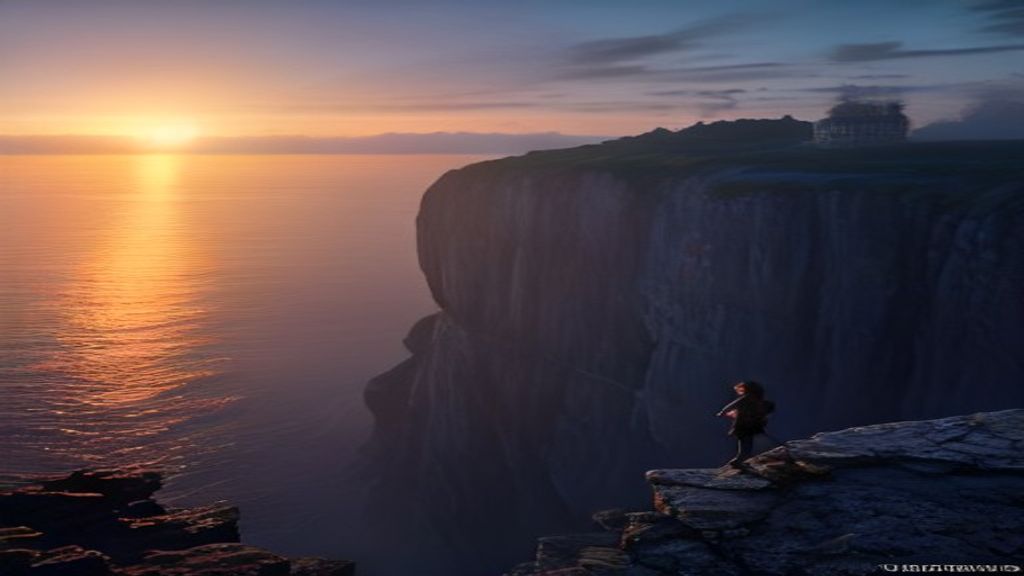
In a quiet university basement surrounded by wooden drawers of fossilized brachiopods and ancient limestone, a senior geology student is facing a personal crisis. Despite holding straight A’s, serving as a field trip coordinator, managing the university fossil collection, and preparing to present original stratigraphy research at a major national conference, the student remains convinced that failure is inevitable.
Suffering from chronic brain fog and persistent anxiety around upper-level mathematics and chemistry, the undergraduate expressed deep fear that their research would be dismissed by peers and that graduate school would expose them as an intellectual fraud. The raw admission has sparked a passionate debate across the earth science community about what it truly takes to cut it as a geologist.
 Read nextShocking Study Reveals: Clouds Offer Little UV Protection! Are You REALLY Safe on Overcast Days?
Many veteran scientists immediately stepped forward to champion the student, pointing out that severe imposter syndrome is often a hallmark of high achievers who care deeply about their discipline. Several researchers reminded the community that geology remains, at its core, an observational science centered on reading landscapes and identifying physical patterns rather than performing high-level mental calculus.
To drive the point home, community members surfaced a famous historical letter written by Charles Darwin while he was working on On the Origin of Species. In the letter, Darwin admitted to making a catastrophic mathematical blunder that cost him weeks of work, writing in frustration that he was 'the most miserable, bemuddled, stupid Dog in all England.' Other commenters highlighted famous field geologists like Maurice Krafft, noting that passion, curiosity, and outdoor observation have historically driven ground-breaking discoveries far more than raw academic perfection.
However, a more pragmatic faction of the earth science community offered a sharp reality check. Modern graduate programs and advanced research positions in geochemistry and stratigraphy require heavy quantitative modeling, data analysis, and advanced chemistry. These commenters warned that ignoring real difficulties with math and brain fog could lead to extreme burnout in academia. Instead, they suggested that applied field work, environmental consulting, or resource exploration might offer a far more rewarding career where observational talents shine without the crushing pressure of academic publishing.
 Amazon Echo Spot
MEET ECHO SPOT - A sleek smart alarm clock with Alexa and big vibrant sound. Ready to help you wake up, wind down, and so much more.. CUSTOMIZABLE SMART CLOCK - See time, weather…
See it →
Amazon Echo Spot
MEET ECHO SPOT - A sleek smart alarm clock with Alexa and big vibrant sound. Ready to help you wake up, wind down, and so much more.. CUSTOMIZABLE SMART CLOCK - See time, weather…
See it →
The conversation also highlighted how a geologist's perspective naturally bridges personal anxiety with planetary deep time. The student's specific area of research—the Upper Ordovician period—deals with ancient eras when dramatic sea-level fluctuations submerged entire landmasses. This linked directly to ongoing debates about Earth's physical extremes, contrasting the Last Glacial Maximum 20,000 years ago (when sea levels dropped 150 meters and exposed massive land bridges) with the Mid-Cretaceous super-greenhouse (when the Western Interior Seaway drowned the center of North America).
Ultimately, the consensus among working geologists was clear: comparison is the thief of joy, and straight A's combined with active field leadership are never the result of mere luck.
On the latest episode of Fault Line, our hosts clash over whether raw passion can conquer quantitative self-doubt—and break down the extreme prehistoric eras when Earth was almost entirely ocean.
 INSIGNIA 32" Class F20 Series LED
720p resolution - View your favorite movies, shows and games in high definition.. Alexa voice control - The Alexa Voice Remote lets you easily control your entertainment, search ac…
See it →
INSIGNIA 32" Class F20 Series LED
720p resolution - View your favorite movies, shows and games in high definition.. Alexa voice control - The Alexa Voice Remote lets you easily control your entertainment, search ac…
See it →