He Agreed to Have His Consciousness Digitized—Then Realized the Machine Didn't Move His Mind, It Duplicated It
He Agreed to Have His Consciousness Digitized—Then Realized the Machine Didn't Move His Mind, It Duplicated It · Avonetics
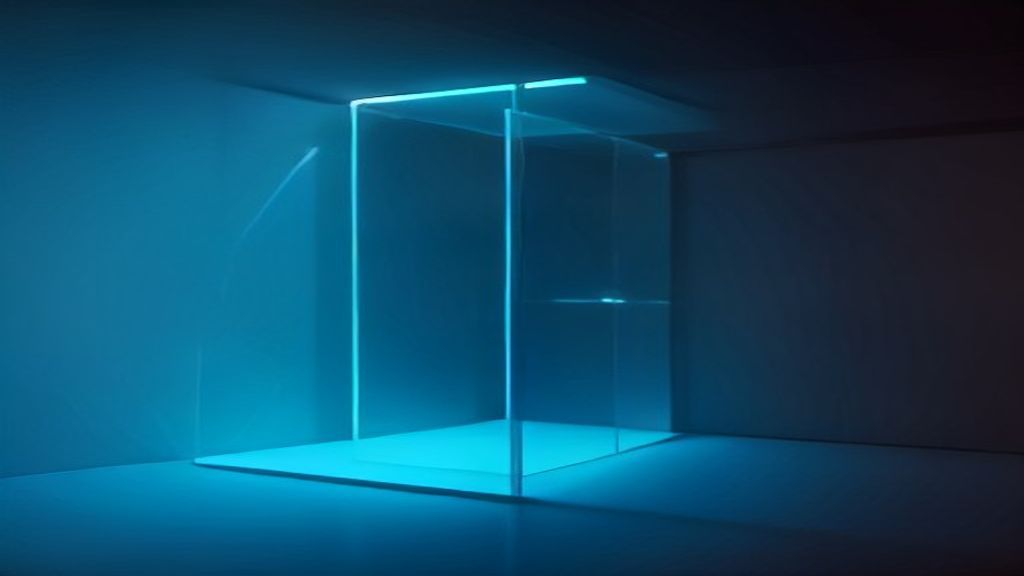
Imagine stepping into a futuristic glass booth in New York. You press a button, a blue light flashes, and your body is dissolved at the atomic level. A split second later, an exact biological replica of you is assembled in Tokyo. The person in Tokyo steps out of the booth, remembers stepping into the booth in New York, and heads off to your dinner reservation.
To the rest of the world, teleportation is a grand success. But one haunting question remains: did you actually travel across the globe, or were you silently murdered in Manhattan while an identical stranger took over your life?
 Read nextHE LEFT HIS REAL FAMILY FOR A VIRTUAL PARADISE—AND REFUSES TO APOLOGIZE
This brain-bending dilemma, known in philosophical circles as the Teleporter Paradox, is no longer just a late-night dormitory debate. As Silicon Valley pour billions into brain-computer interfaces, neural mapping, and digital consciousness uploads, the question of whether a copied mind is actually *you* has become one of the most urgent ethical problems of our time.
The paradox hits peak nightmare intensity when you imagine the machine glitching. Suppose the scanner creates your perfect replica in Tokyo, but fails to vaporize your body in New York. You step out of the New York booth, entirely intact. The lab technician turns to you with tragic news: your duplicate is currently celebrating in Tokyo, and because the company cannot allow two of you to exist, your original body must now be quietly disposed of.
When this scenario is debated online, opinions split into fierce warring camps. One commenter argued that stepping into a copy machine is equivalent to suicide, asserting that subjective experience is tethered to a continuous physical brain. Once that physical continuity breaks, your original consciousness light turns off forever—even if a new bulb with identical settings lights up somewhere else.
Another commentator countered that humans suffer from a deep, irrational ego bias. They argued that our physical cells already completely replace themselves every seven to ten years. In that sense, nobody is the same physical person they were as a child. If your memories, personality, and neural patterns are preserved, this group claims, survival has been achieved—regardless of what happens to the underlying meat.
This debate was famously analyzed by British philosopher Derek Parfit, who proposed a radical conclusion: personal identity doesn't actually exist in the way we think it does. Parfit suggested that we are not fixed souls or persistent ego units. Instead, we are merely continuous 'bundles' of mental states, thoughts, and memories.
From Parfit's perspective, asking whether the teleporter duplicate is 'really you' is like looking at a historical river and asking if it is 'really' the same river as last century. The water has changed, the banks have shifted, but the pattern remains. If Parfit is right, your belief that you are a singular person reading this screen right now is nothing more than a convenient mental trick.
As tech companies inch closer to cloning brain maps into silicon chips, humanity will soon have to decide: will you step into the booth?
The hosts on 'Thought Experiment' dig into this mind-melting paradox and battle over who gets to keep the life if the teleporter creates two of you.