From Secret 1930s 'Ghost Planes' to Checkride Heartbreak: Inside Aviation’s Boldest Airborne Chronicles
From Secret 1930s 'Ghost Planes' to Checkride Heartbreak: Inside Aviation’s Boldest Airborne Chronicles · Avonetics
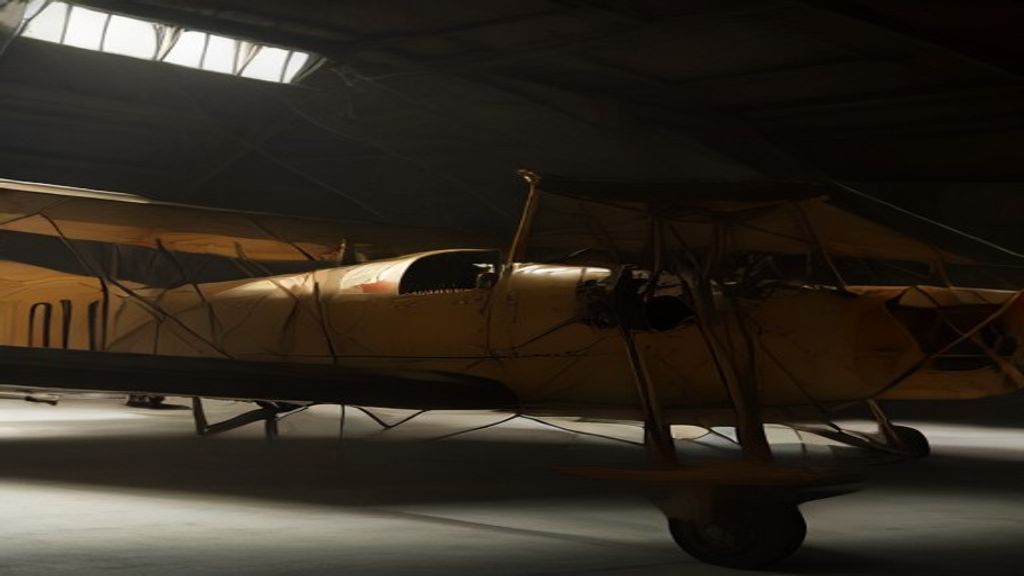
Deep inside the historic airframes of the de Havilland Aircraft Museum rests a wooden biplane that looks like a standard Tiger Moth at first glance. But sitting beside its restored fuselage is a bulky radio control box built in the 1930s—a piece of forgotten technology known as the Queen Bee.
Long before modern autonomous military aircraft took to the skies, Royal Artillery gunners practiced their anti-aircraft target shooting against these pilotless, radio-controlled wooden airplanes. Built using a wooden fuselage and Tiger Moth wings, the Queen Bee flew live military target missions off the coast of Wales through the end of World War II.
 Read nextHe Said He Was 'Willing and Able.' He Also Had a Cane and a Brand-New Knee.
While some aviation historians trace uncrewed flight back even further to Archibald Low’s 1917 radio-guided missile experiments, the Queen Bee proved that full-sized pilotless aircraft could operate reliably under remote radio control. Servicemen who trained against them witnessed what was essentially the birth of modern uncrewed aerial vehicle concepts.
Yet, as modern aviators know all too well, flying with a pilot inside the cockpit introduces a level of human pressure that no remote control system can replicate. One student pilot recently shared the intense emotional journey of earning a Private Pilot License after three agonizing years of FAA medical holds and constant work travel.
During the practical flight test, heat and nerves took a heavy toll. While executing a full-stop landing at a busy Class D airport, the student misprocessed the tower’s entry instructions, confusing a downwind midfield instruction. The designated pilot examiner intervened, causing the student to lose focus, enter final approach with far too much speed, and float long down the runway.
The examiner immediately issued a disapproval for the normal landing maneuver. What followed was a crushing 'flight of shame' back to the home airport—where, in a stroke of ultimate irony, the student executed a perfectly smooth landing.
Refusing to let the failure define the journey, the student finished all remaining short-field and soft-field requirements during the same flight, retrained with an instructor two days later, and passed the re-test with flying colors.
Reactions from the flying community remain split. One commenter argued that misinterpreting air traffic control instructions in controlled airspace poses severe safety risks, fully justifying the examiner's strict disapproval. Another observer countered that test anxiety and extreme cockpit heat easily cause minor oversights, suggesting examiners should allow students a chance to correct rather than issue an immediate failure.
Our hosts dissect both sides of this high-stakes aviation debate on the latest episode of Holding Pattern.