Coaching Chaos to Court Command: How Volleyball Gurus Are Organizing Their Playbooks (and Powering Up Their Spikes!)

Coaching Chaos to Court Command: How Volleyball Gurus Are Organizing Their Playbooks (and Powering Up Their Spikes!) · Avonetics
 Bubble Skincare Day Dream Vitamin C
Turn Clear Skin Dreams Into Reality - This super unique combination of Vitamin C + Niacinamide is a scientific power couple for your skin. Bubble's secret weapon glow serum helps s…
See it →
Bubble Skincare Day Dream Vitamin C
Turn Clear Skin Dreams Into Reality - This super unique combination of Vitamin C + Niacinamide is a scientific power couple for your skin. Bubble's secret weapon glow serum helps s…
See it →
For many volleyball coaches, the sheer volume of material accumulated over years can feel less like a resource and more like a burden. Drills are jotted down in various notebooks, practice plans are scattered across digital documents, and player information is buried in spreadsheets. The common lament? "Where the hell did I put that thing?"
One coach, fed up with the disorganization, decided to build their own solution: VBPractice. The goal isn't AI-driven practice generation, but rather a simple, centralized workspace to keep track of existing ideas. The emphasis is on the coach's creativity, with the software acting as an organized vault for those brilliant, human-generated plans.
 Read nextSlow Motion vs. Total Panic: The Science of Volleyball Court Vision and the Brutal Reality of 'Playing Up'
The question echoes through coaching circles: How do other coaches manage this informational tidal wave? Are they all navigating a similar sea of Google Docs, Notes apps, and increasingly complex spreadsheets, or is there a secret to seamless organization?
One prevalent approach involves meticulous digital structuring. One commenter detailed using a Google Doc with individual tabs for each skill and concept. Within these tabs, they list drills, activities, videos, and cues, even linking to past practice plans for historical context. This method emphasizes a comprehensive, cross-referenced system.
Another coach, however, found their breakthrough not in *what* they stored, but *how* they indexed it. Initially, they categorized drills by skill – passing, serving, blocking – but found themselves unable to locate what they needed in the heat of the moment. Their solution? Filing everything by the *problem it fixes*. If the team is struggling with receiving serves, the drills are found under "serve reception issues," not "passing drills." This pragmatic approach directly addresses immediate coaching needs.
Conversely, a significant camp champions simplicity and adaptability. Many coaches confess to relying heavily on their phone's Notes app, which becomes a loaded repository of ideas. This preference highlights the need for quick, accessible capture over elaborate systems.
Perhaps the most striking counter-argument suggests that less is often more. One coach shared that they predominantly use "about 3 drills on repeat" which can be built upon and conditioned to target specific needs. They prioritize familiarity and consistency, introducing novel drills sparingly, only when a team's unique personality or motivation calls for it. The philosophy here is that the variable should be the constraint applied to a drill, not the drill itself.
As one individual succinctly put it: "A library of 200 drills is a museum." They argue that a massive collection often goes unused, and what truly matters is capturing the real-time feedback and results. Knowing that "this flopped, they were flat after conditioning" is far more valuable six months later than a pristine drill diagram.
This debate highlights a fundamental tension in coaching: the desire for comprehensive resources versus the need for practical, adaptable strategies. Is the ideal coach a meticulous archivist or a master of improvisation?
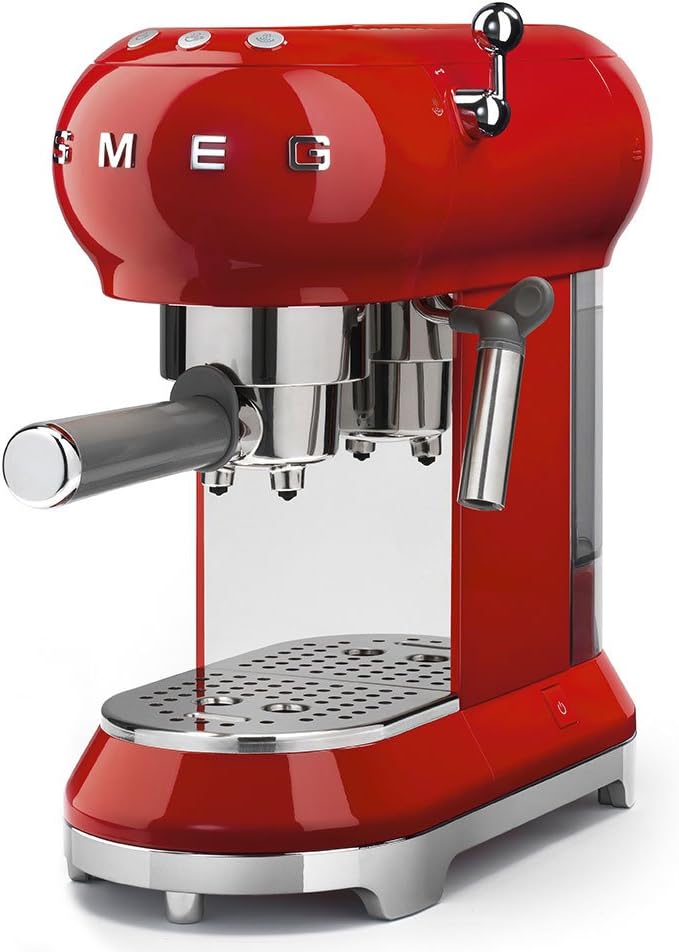 Smeg ECF01RDUS Espresso Coffee Machine
User friendly control panel with 3 buttons to adjust preferred settings and select single/double espresso or the activation of steam function.. De-calc system alarm will alert you…
See it →
Smeg ECF01RDUS Espresso Coffee Machine
User friendly control panel with 3 buttons to adjust preferred settings and select single/double espresso or the activation of steam function.. De-calc system alarm will alert you…
See it →
***
From Libero to Opposite: Powering Up Your Spike
Shifting positions in volleyball, especially from a defensive role like Libero to an offensive powerhouse like Opposite Hitter, presents a unique set of challenges. One player recently made this transition and is struggling with their arm swing, specifically generating power.
They describe hitting the ball while seemingly falling down, unable to achieve the "rocket spikes" seen from others. Experimenting with different arm swings, they favor a circular motion but are unsure if their technique is correct or if it requires more vertical leap. With a vertical in the low 30s (and a minor leg cramp limiting max jumps), they wonder if a different approach, like the 'bow and arrow' swing, might be more effective.
This common dilemma points to several key components of a powerful spike: proper body rotation, timing of the jump and arm swing, and efficient transfer of energy from the legs through the core to the hitting arm. The 'circular' arm swing, while effective for some, can sometimes lead to a loss of power if not executed with optimal timing and shoulder rotation. The 'bow and arrow' often emphasizes a strong back swing and a powerful, whip-like snap, which can generate significant velocity.
Experts often advise focusing on a full body approach, not just the arm. This includes a strong penultimate step, coordinated arm lift for momentum, and hitting the ball at the peak of the jump, with the body fully extended. The arm swing should be a natural extension of the body's rotation, snapping through the ball with the wrist. For players like Nishida, their incredible airtime allows for more time to execute the swing, but even with a lower vertical, proper mechanics can still yield powerful results.
Whether it's organizing your coaching arsenal or perfecting your spike, the Net Violation hosts dig into these dilemmas on the podcast.
 Sony WH-1000XM5 headphones
Whether you work in a noisy office or travel often, Sony WH-1000XM5 headphones deliver outstanding noise cancellation and exceptional comfort. They are ideal for anyone who wants to stay focused or enjoy rich, detailed audio anywhere. Check out the link in the episode description.
Learn more →
Sony WH-1000XM5 headphones
Whether you work in a noisy office or travel often, Sony WH-1000XM5 headphones deliver outstanding noise cancellation and exceptional comfort. They are ideal for anyone who wants to stay focused or enjoy rich, detailed audio anywhere. Check out the link in the episode description.
Learn more →