Apple Just Paid Ireland $17 Billion — So Why Doesn't Dublin Have a Metro?

Apple Just Paid Ireland $17 Billion — So Why Doesn't Dublin Have a Metro? · Avonetics
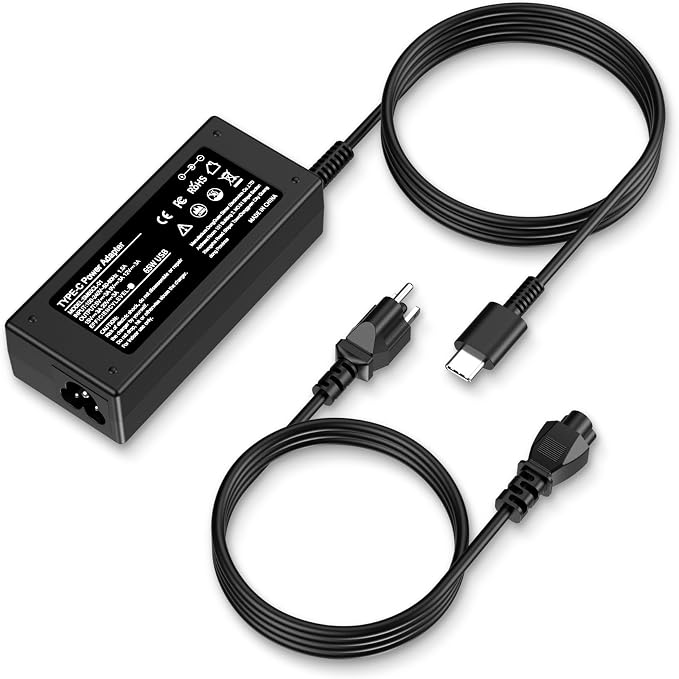 Universal 65W USB C Laptop Charger
65W USB C Laptop Charger-Input: 100-240V~1.8A 50-60Hz, Output: 5V/3A 9V/3A 12V/3A 15V/3A 18V/2.5A 20V/3.25A, Connector:USB-C TYPE-C,Not fit for Round Tip or Micro USB Please check…
See it →
Universal 65W USB C Laptop Charger
65W USB C Laptop Charger-Input: 100-240V~1.8A 50-60Hz, Output: 5V/3A 9V/3A 12V/3A 15V/3A 18V/2.5A 20V/3.25A, Connector:USB-C TYPE-C,Not fit for Round Tip or Micro USB Please check…
See it →
Seventeen billion dollars. That is what Apple paid Ireland in tax last year, and the number is so large it bends everything around it.
The figure lands courtesy of new EU rules that require large companies to break down their finances country by country for the first time. Instead of one global blur, there is finally a map — and on that map, Ireland is enormous.
Read nextRedaction Wars: How to Safely Erase PDFs and Photos—and Why One Company's Mass Surveillance Network Just Lost Its War on PrivacyApple's worldwide tax bill for the year comes to $43 billion. Ireland alone takes $17 billion of it. Forty percent of what one of the largest companies on Earth pays anywhere on the planet goes to a country of roughly five million people.
Then you read the fine print.
The payment is massively inflated by a 2024 ruling from the EU's top court, which ordered Apple to hand Ireland €13 billion in back taxes. The judges found that Ireland had granted the company unlawful state aid, producing an effective tax rate of less than one percent.
Less than one percent. And Ireland spent years in court fighting not to receive the money.
Do the subtraction and the headline deflates fast. Strip out the court-ordered lump sum and Apple's ordinary corporate tax bill for the year in Ireland is roughly $2 billion. The rest is a decade of avoided tax arriving all at once.
That detail did not go unnoticed. "Around $15 billion of that $17 billion total was just the back taxes Apple owed from over a decade of dodging," one commenter wrote. "Their regular corporate tax bill for the year was only about $2 billion, so it's completely a one-off spike."
Another was blunter about the framing: the honest version, they argued, is "Apple Paid $17 Billion in BACK Taxes to Ireland Last Year," and anything softer is a headline chasing clicks.
From there, the argument split cleanly in two.
One camp aimed at the structure of European tax itself. "The EU needs to force tax to be collected in the country of sale," one commenter said flatly.
Another pushed harder. "I am still waiting for the day when the EU grows some balls and sets an EU-wide minimum tax of at least 20% on multinational corporations' profit," they wrote. "It's insane how Ireland and Luxembourg get all the tax money from multinationals while most sales happen in other countries who get nothing."
One commenter explained the machinery in plain terms: the entire purpose of a main European headquarters in Ireland is to sell brand rights onward to the national subsidiaries — Apple Italy, Apple France, Apple Germany — so that profit surfaces where the tax rate is lowest rather than where the customers actually live.
"That money should go to all EU countries, to be honest," another said.
And several want numbers that still have not been published. "I'd like to know how much it paid in France or Germany," one wrote.
The opposing camp turned the microscope around — away from the company, toward the government now holding the check.
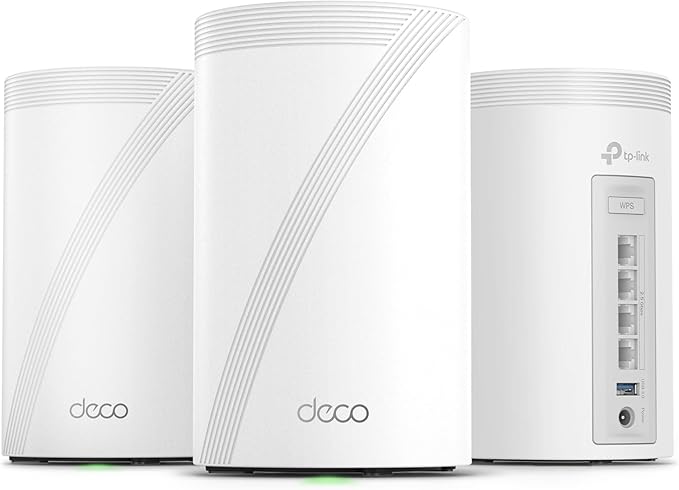 Deco 7 Pro Tri-Band WiFi 7
𝐅𝐞𝐚𝐭𝐮𝐫𝐞-𝐑𝐢𝐜𝐡 𝐖𝐢-𝐅𝐢 𝐁𝐮𝐢𝐥𝐭 𝐭𝐨 𝐋𝐚𝐬𝐭: Get expansive whole-home coverage, fast Wi-Fi 7 speeds, and a future-ready 10G WAN/LAN port that stays ahead as your network grows. Ideal for both…
See it →
Deco 7 Pro Tri-Band WiFi 7
𝐅𝐞𝐚𝐭𝐮𝐫𝐞-𝐑𝐢𝐜𝐡 𝐖𝐢-𝐅𝐢 𝐁𝐮𝐢𝐥𝐭 𝐭𝐨 𝐋𝐚𝐬𝐭: Get expansive whole-home coverage, fast Wi-Fi 7 speeds, and a future-ready 10G WAN/LAN port that stays ahead as your network grows. Ideal for both…
See it →
"Where does Ireland spend all this money?" one commenter asked. "Why isn't Ireland a utopia?"
Someone else ran the arithmetic for scale: $17 billion buys nearly 13 million iPhone 17 Pros. For a population of five million, that is more than two flagship phones per citizen — and yet the windfall is invisible in daily life.
The sharpest version of the complaint is about trains.
"Ireland received 17 billion and still only has two tram lines," one commenter wrote. "One goes towards the ferry terminal, but does not connect. There is nothing to the airport. Come on Ireland, get serious about your public transportation in Dublin."
Another put it as a wish rather than an attack: "Come on Apple, you need to up your game and keep it coming — the people of Dublin need a metro."
One more drew the comparison that stings hardest. "It's so great to see that reflected in the average person's quality of life," they said, dripping with sarcasm. "Imagine a Scandinavian country was raking in taxes like this."
There is a version of this story where the ruling is a victory lap: a court found an illegal arrangement, killed it, and forced a full payout. The money is real, it is in a real treasury, and the sub-one-percent deal no longer exists.
There is another version where nothing changed at all. The lump sum is a one-time event, the recurring bill is a rounding error against Apple's global revenue, and the underlying design — profit routed to whichever European country offers the softest landing — is still standing.
What is genuinely new is the disclosure itself. Before these rules, none of this arithmetic was possible from the outside. Now anyone can compare what a company pays in the country where it is registered against the countries where it actually sells.
Which is why that unanswered question keeps circling back: France and Germany are two of the largest consumer markets in Europe. Nobody has seen those numbers yet.
Until somebody publishes them, the loudest fact in this story remains the one the headline buried — that the biggest tax payment of the year was, mostly, a bill that came due ten years late.
The hosts of Circuit Breaker take this one apart on the show, and they do not agree on who deserves the blame.
 Sony WH-1000XM5 headphones
Whether you work in a noisy office or travel often, Sony WH-1000XM5 headphones deliver outstanding noise cancellation and exceptional comfort. They are ideal for anyone who wants to stay focused or enjoy rich, detailed audio anywhere. Check out the link in the episode description.
Learn more →
Sony WH-1000XM5 headphones
Whether you work in a noisy office or travel often, Sony WH-1000XM5 headphones deliver outstanding noise cancellation and exceptional comfort. They are ideal for anyone who wants to stay focused or enjoy rich, detailed audio anywhere. Check out the link in the episode description.
Learn more →