The Great Labneh Disaster: Why Won’t This Strained Yogurt Firm Up?
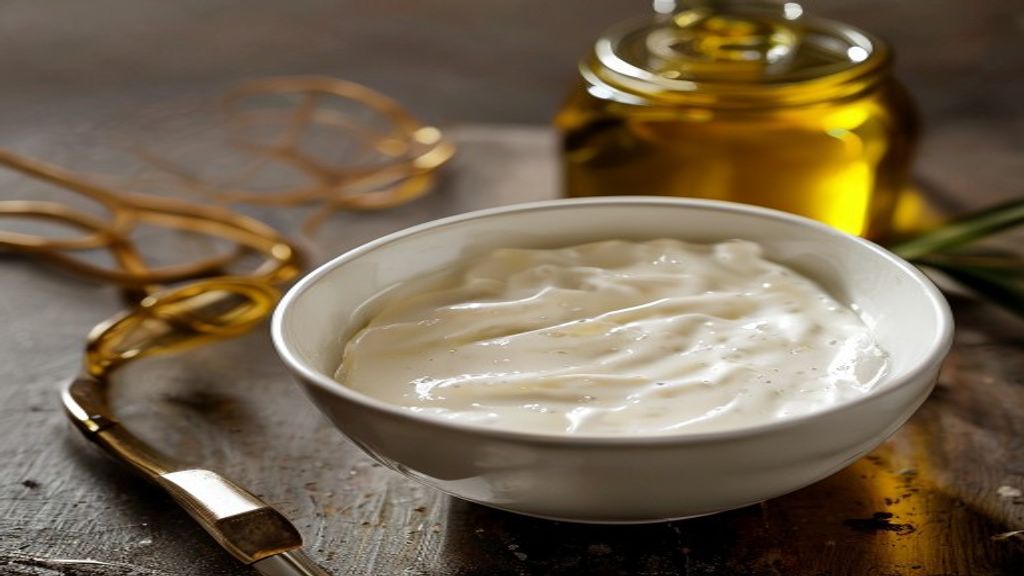
The Great Labneh Disaster: Why Won’t This Strained Yogurt Firm Up? · Avonetics
There are few culinary projects as deeply satisfying as making your own labneh. The traditional Middle Eastern strained yogurt is tangy, rich, and remarkably versatile. When strained for a day, it becomes a luscious, spreadable dip perfect for warm pita. Strain it for three days, and it transforms into a dense, clay-like dough that can be rolled into delicate balls, coated in za'atar or sumac, and submerged in golden olive oil for long-term preservation.
At least, that is how the recipe is supposed to work.
 Read nextThe Great Broth Betrayal: Why Your Homemade Vegetable Stock Tastes Like Salty Water
One passionate home cook recently learned the hard way that dairy does not always yield to human ambition. After purchasing a specialized plastic yogurt strainer specifically designed for making labneh balls, they whisked half a teaspoon of salt into 500 grams of local curd and set the batch inside a 3°C refrigerator. According to the recipe timeline, a firm, rollable texture requires 48 to 72 hours. But after 30 agonizing hours of waiting, gently scraping the mesh sides, and draining the collected whey, the curd remained stubbornly creamy and soft.
To make matters worse, this was not an isolated incident. A previous attempt using Skyr yogurt yielded the exact same wet, unrollable mess. Frustrated and staring at a sloshing tub of cold dairy at two in the morning, the cook was left asking a frantic question: Can this wet labneh be saved, or is it doomed to be a forever-dip?
Food enthusiasts and home dairy makers quickly weighed in on the calamity, splitting into two distinct camps over what went wrong.

One camp firmly blamed modern kitchen tools and commercial ingredients. One commenter noted that relying on a free-standing plastic strainer without cheesecloth is a recipe for disappointment. They argued that multi-layered cheesecloth allows superior airflow and drainage. Furthermore, several experienced cooks pointed out that physical weight is mandatory when pushing past the spreadable dip phase into firm ball territory. Placing a heavy jar or canned good atop wrapped curd forces trapped moisture out through sheer pressure. Others pointed out that many store-bought curds and yogurts contain hidden stabilizers like pectin or guar gum, which are explicitly formulated to lock in water and resist separation.
However, a second camp argued that impatience and poor technique were the true culprits. Another contributor pointed out that at a chilly 3°C, liquid separation slows down significantly compared to warmer temperatures. At 30 hours, the batch was barely halfway through the recommended 72-hour timeline for ball-consistency labneh. Additionally, experts warned that repeatedly scraping the interior mesh of a strainer breaks the natural filter bed formed by settled dairy solids, pushing micro-particles into the mesh and clogging the pores entirely.
So, is the wet curd salvageable? The general consensus among seasoned kitchen veterans is yes—if drastic measures are taken immediately. Line a colander with real cheesecloth, transfer the creamy curd, apply a heavy weight on top, and let gravity and pressure do the heavy lifting for the remaining 42 hours.
Our podcast hosts take a fiery bite out of this whole dairy drama on the latest episode of Overcooked, debating whether gadgets or traditional tools reign supreme in the battle of the bowl.