The AI Voice Scam Trap: Why Security Training Is Teaching You the Wrong Signs
The AI Voice Scam Trap: Why Security Training Is Teaching You the Wrong Signs · Avonetics
 Volicci
Featuring the "Grow Anyway" — plus a fresh original design every day.
Shop this at Volicci →
Volicci
Featuring the "Grow Anyway" — plus a fresh original design every day.
Shop this at Volicci →
If you have attended a corporate cybersecurity seminar recently, you have likely been given a standard checklist for identifying AI voice scams. Listen for robotic pauses. Pay attention to strange, monotonic cadences. Watch out for awkward delays that reveal a machine is translating text into speech.
There is just one massive problem: real-world cybercriminals are already moving past automated text-to-speech systems, and current training methods are leaving employees dangerously exposed.
Read nextAN EXECUTIVE ESPRESSO MACHINE JUST ACCIDENTALLY NUKED A $2M CORPORATE NETWORKAccording to red-team security researchers who design voice phishing simulations for enterprise clients, the most dangerous form of voice phishing—known in the industry as vishing—does not rely on an automated AI bot reading a script. Instead, it relies on a human operator wearing a real-time AI voice changer.
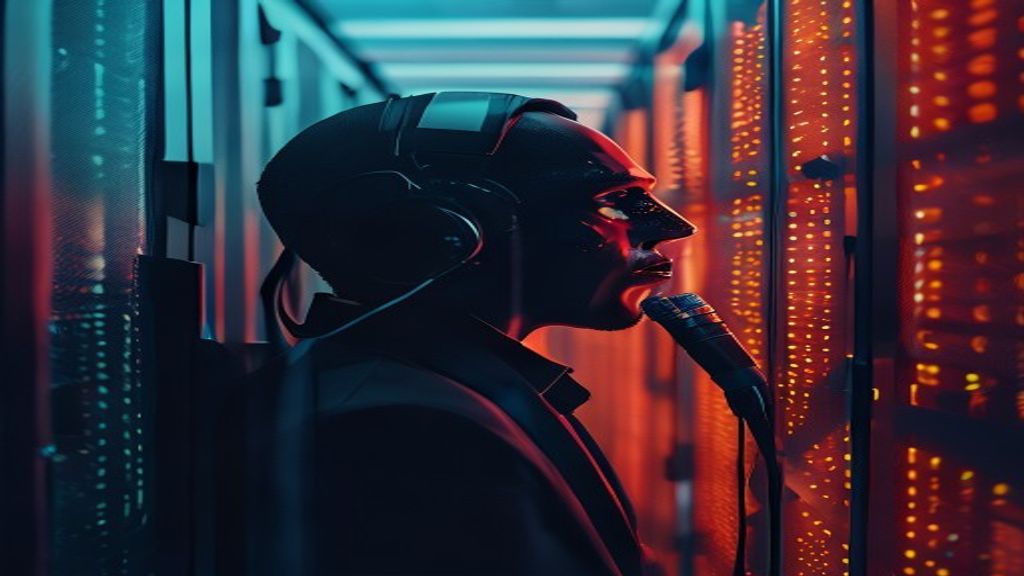
In a real-time voice conversion attack, a live human criminal wears a headset and speaks directly to a target. The audio passes through GPU-backed neural networks that alter the speaker's vocal characteristics instantly, transforming their voice into that of a chief executive, a bank official, or an internal systems administrator.
Because a real human is driving the conversation, every subtle element of natural human speech remains intact. The caller can laugh organically, react instantly to unexpected questions, introduce natural hesitations, and display authentic emotional urgency. The classic red flags of text-to-speech technology simply do not exist because no text-to-speech software is being used.
To demonstrate how accessible this technology has become, security researchers recently deployed a live demonstration powered by eight dedicated cloud GPUs. The system allowed users to test real-time voice conversion firsthand, demonstrating how easily a human operator can adopt a completely different vocal identity on the fly.
The reaction from tech professionals has been sharply divided.
Your brand, right here.Reach story-obsessed listeners in 45+ languages → advertise on AvoneticsSome industry observers argue that the security sector is facing an urgent crisis. One commenter noted that security awareness programs are actively failing companies by conditioning employees to hunt for robotic glitches that sophisticated attackers never produce. Another security expert emphasized that when an attacker combines natural human conversational pacing with high-pressure social engineering, auditory verification becomes virtually useless.
However, skeptics contend that the threat is being exaggerated. One tester reported that after trying real-time voice conversion tools, the resulting audio sounded 'really, really bad,' pointing out persistent digital phasing, noticeable latency, and metallic distortion. Others argued that high latency and poor audio reproduction make these voice changers obvious to anyone paying close attention.
Defenders of the threat model counter that phone networks already compress audio dramatically, which often masks processing artifacts and makes a distorted AI voice sound like a standard spotty cellular connection.
On the latest episode of System Error, our hosts break down this high-tech security dilemma to determine whether real-time voice changing is a clear and present danger or just an overhyped tech demo.