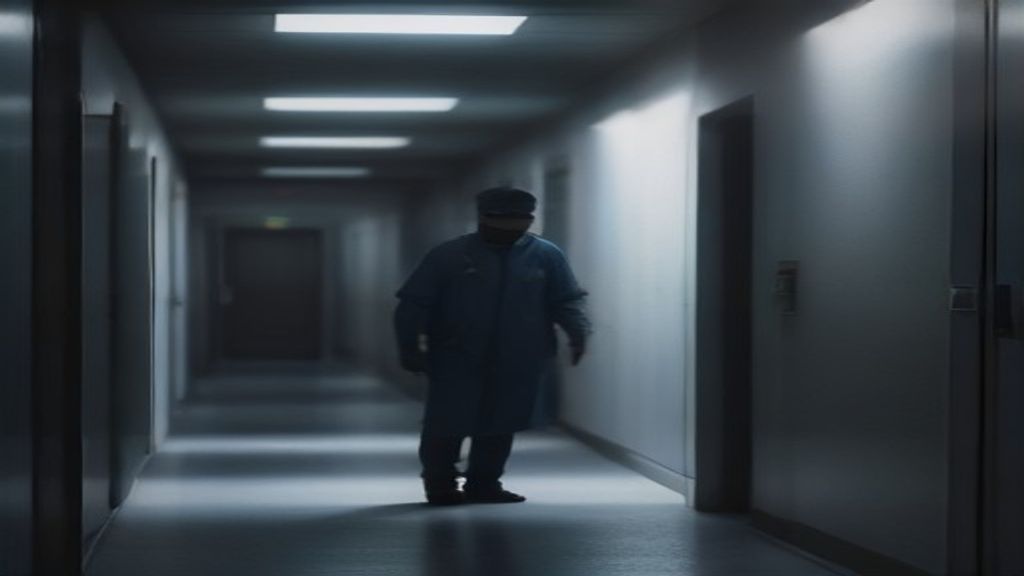
'Pounds of Dust' and a Swat Team: Flying Insects and Bureaucratic Hurdles Throw Hospital Staff Into Chaos

'Pounds of Dust' and a Swat Team: Flying Insects and Bureaucratic Hurdles Throw Hospital Staff Into Chaos · Avonetics
 Silkland HDMI 2.1 Cable
Elevate your gaming experience with smooth picture 4K@120Hz gameplay for PS5 and Xbox, and ultra-responsive 4K@144Hz for PC. Whether you're pushing your console or PC to the limit…
See it →
Silkland HDMI 2.1 Cable
Elevate your gaming experience with smooth picture 4K@120Hz gameplay for PS5 and Xbox, and ultra-responsive 4K@144Hz for PC. Whether you're pushing your console or PC to the limit…
See it →
A medical resident works an eighty-hour week, making split-second life-or-death decisions in an American hospital. Thousands of miles away, their spouse walks out of a U.S. embassy with a consular rejection slip in hand. The cause? Section 214(b) of the Immigration and Nationality Act—a clause requiring applicants to prove they do not intend to abandon their foreign residence.
The consular officer issues a demand for a formal letter outlining the exact purpose and duration of the stay. For foreign medical graduates keeping American healthcare systems afloat, the emotional blow is severe. Balancing delicate medical procedures while fighting bureaucratic barriers leaves young doctors stretched to their breaking point.
 Read nextNurse Goes To War Over Doctors' Refusal To Order Catheters, Citing 16 Straight Caths In One Night
Yet, as administrative friction mounts outside the hospital, physical hazards are compounding inside the facility walls. In an active operating suite, a surgical team recently found themselves ducking as a large blowfly circled overhead before a scheduled case.
Determined to preserve sterile conditions, staff attempted to swat the fly away from overhead fixtures. What happened next left the team speechless. Slapping near the ceiling lights sent pounds of dust raining down onto the floor, while disturbing the equipment booms dislodged hidden layers of dust bunnies.
When the team contacted the charge nurse to pause the case and handle the environmental issue, management brushed off the concern. The charge nurse stated bluntly that cases are not delayed for insects in the room, demanding the schedule move forward.
 eufy X10 Pro Omni Robot Vacuum
Experience truly hands-free cleaning. The mop pads self-clean with fresh water and dry swiftly with 45°C heated air. The 2.5L dust bag only needs replacing every 2 months, while th…
See it →
eufy X10 Pro Omni Robot Vacuum
Experience truly hands-free cleaning. The mop pads self-clean with fresh water and dry swiftly with 45°C heated air. The 2.5L dust bag only needs replacing every 2 months, while th…
See it →
The incident has sparked fierce debate across the healthcare community regarding the concept of surgical conscience—the ethical imperative to maintain sterile standards regardless of who is watching or how much time it takes.
One observer noted that allowing a known insect to hover over open surgical setups poses an unacceptable infection risk that no patient should endure. Another commenter argued that systemic dust accumulation points to severe facility neglect that compromises the entire operating environment.
Conversely, others within healthcare management point out the intense pressure on surgical schedules. Delaying a case can stall emergency admissions, cause severe floor bottlenecks, and cost hospitals thousands of dollars per minute. For charge nurses managing dozens of operating rooms, balancing risk against operational survival is an everyday reality.
On the podcast, the hosts of Code Red tackle both sides of this chaotic shift, debating where administrative duty ends and patient safety begins.
 Filterbuy 20x30x1 Air Filter MERV 8
20x30x1 replacement air filters for your furnace, air conditioner, or heat pump enhance HVAC system efficiency and support a healthy lifestyle (actual size: 19.63" x 29.63" x 0.75"…
See it →
Filterbuy 20x30x1 Air Filter MERV 8
20x30x1 replacement air filters for your furnace, air conditioner, or heat pump enhance HVAC system efficiency and support a healthy lifestyle (actual size: 19.63" x 29.63" x 0.75"…
See it →