'I Had No Safe Way to Order It': The Night a Hospital's Digital Backbone Collapsed Mid-Trauma
'I Had No Safe Way to Order It': The Night a Hospital's Digital Backbone Collapsed Mid-Trauma · Avonetics
 Sony WH-1000XM5 headphones
Whether you work in a noisy office or travel often, Sony WH-1000XM5 headphones deliver outstanding noise cancellation and exceptional comfort. They are ideal for anyone who wants to stay focused or enjoy rich, detailed audio anywhere. Check out the link in the episode description.
Learn more →
Sony WH-1000XM5 headphones
Whether you work in a noisy office or travel often, Sony WH-1000XM5 headphones deliver outstanding noise cancellation and exceptional comfort. They are ideal for anyone who wants to stay focused or enjoy rich, detailed audio anywhere. Check out the link in the episode description.
Learn more →
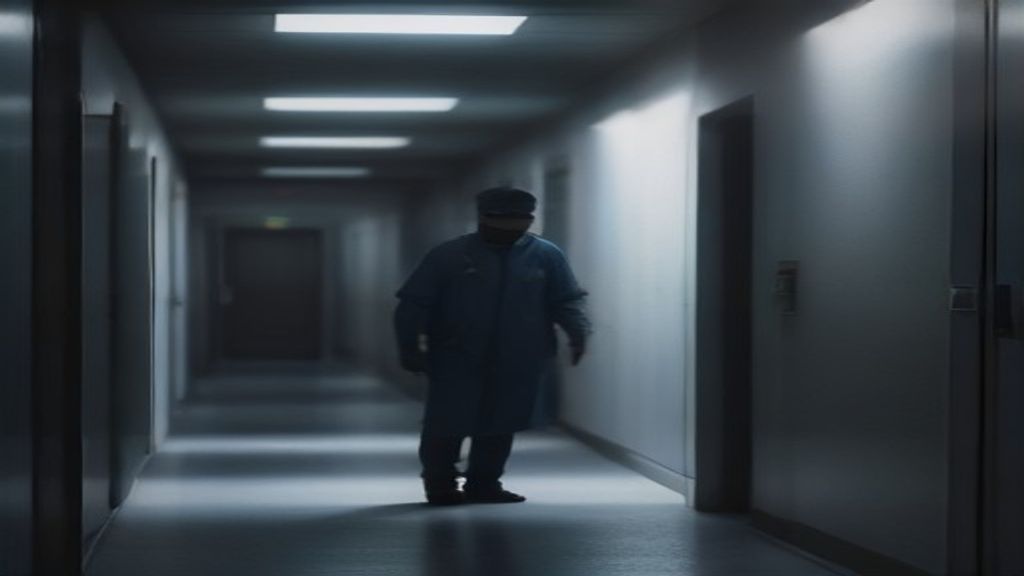
It starts, as the worst nights always do, with two bad things happening at the exact same time.
The electronic medical record system begins to stutter — orders slow, lab results freeze, screens stop responding. And then the radio crackles: multiple-vehicle accident, seven incoming, three critical.
 Read nextNurse Goes To War Over Doctors' Refusal To Order Catheters, Citing 16 Straight Caths In One Night
This is the moment healthcare workers who have lived it describe with a kind of exhausted precision. Not panic. Precision. Because panic is a luxury nobody on that floor can afford.
Accounts from nurses, residents, and pharmacists working in high-volume emergency departments paint a remarkably consistent picture of what happens when a mass casualty incident collides with an unplanned EMR outage. It is a story the healthcare industry has not fully reckoned with — and the stakes are measured in milligrams and minutes.
According to the American College of Emergency Physicians, nearly three-quarters of emergency departments reported at least one unplanned IT outage in a recent 12-month period. The average lasted between four and eight hours. That number lives as a dry statistic until it lands on a Friday night when influenza has already gutted the nursing roster.
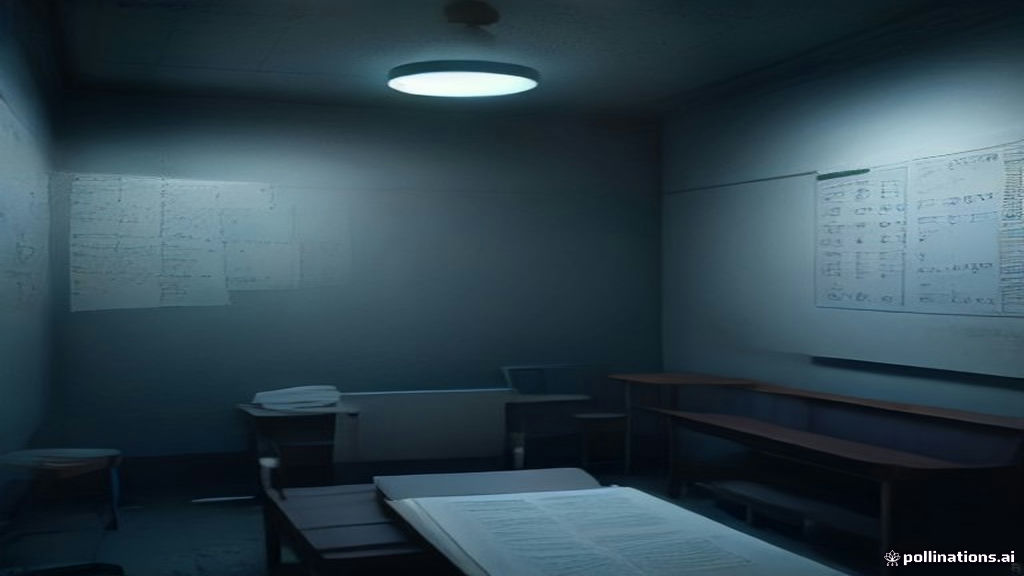
Every hospital has downtime procedures. Binders. Paper forms. Pre-printed order sets. In practice, healthcare workers describe procedures that are theoretical at best and dangerous at worst — forms nobody has practiced, handwriting nobody can read under pressure, protocols written for a staffing level that no longer exists.
For pharmacists, the collapse is particularly acute. During EMR downtime, the allergy list disappears. Weight-based dosing history disappears. Adverse reaction flags disappear. Every verbal or written order becomes a manual verification exercise — for patients who, in a trauma scenario, have no records at all yet. One pharmacist's description, shared in a healthcare professional community, captured it with brutal economy: trying to be a safety net when the net has no edges.
Residents find themselves absorbing the collision from every direction simultaneously. The attending calls verbal orders. Nursing needs written documentation. Pharmacy needs a signed form. The consultant on the phone is asking for lab values that don't exist because the system that would have them is the same system that just went dark.
One surgery resident described the experience as documentation paralysis — knowing exactly what a patient needs, and having no safe, legal, or traceable path to order it.
A 2019 study in the Journal of Patient Safety estimated that medication error rates increase by roughly 42 percent during unplanned EMR outages. That number does not account for the compounding variable of an understaffed floor managing seven trauma patients simultaneously.
 Ekouaer Christmas Family Matching Pajamas Long
 Sleeve Button Down Pj Set · Home
See it →
Ekouaer Christmas Family Matching Pajamas Long
Ekouaer Christmas Family Matching Pajamas Long Sleeve Button Down Pj Set · Home
See it →
The healthcare community is not in agreement about where responsibility sits. Some point to infrastructure: EMR vendors have built systems with insufficient redundancy, and hospitals have layered critical clinical functions onto digital platforms without investing in genuine failsafes. Others argue the real failure is training — that modern clinicians have been deskilled from analog workflows, and that annual binder reviews do not constitute preparation.
A third perspective, voiced most sharply by nurses and pharmacists, cuts straight to staffing. The manual workarounds built into downtime procedures assume a workforce density that the nursing shortage has made structurally unavailable. The math simply does not work.
One commenter in a nursing forum framed it directly: the downtime protocol was written for a department with six nurses on the floor. There were three.
Another argued the problem is upstream of the hospital entirely — that vendors should be legally liable for adverse events during documented outages, full stop.
Liability in these scenarios remains genuinely murky. When a patient is harmed during a period of documented system failure, the legal and ethical question of who bears responsibility — the clinician, the institution, the technology vendor — has not been cleanly resolved in most jurisdictions.
What is clear is that the convergence of digital dependency, chronic understaffing, and aging downtime infrastructure has created a category of risk the industry acknowledges in policy documents and under-addresses in practice.
The ambulances don't wait for the server to come back online.
The hosts of Code Red go deep on this one — breaking down the real accounts, the liability questions, and what a shift like this actually costs the people who survive it.