Bare Hands and Banana Spiders: Vacationer’s Creek Bank Bushcraft Project Raises Flash Flood and Ethics Alarms
Bare Hands and Banana Spiders: Vacationer’s Creek Bank Bushcraft Project Raises Flash Flood and Ethics Alarms · Avonetics
What begins as a quiet family vacation in Seminary, Mississippi, has turned into a high-stakes lesson in primitive engineering and backcountry survival tactics along the scenic banks of Okatoma Creek.
Staying at a rental cabin along Fairchild Landing, one intrepid vacationer decided to spend a two-hour break stepping completely away from modern conveniences. Armed with no hatchets, saws, or heavy iron tools, the vacationer set out to construct a primitive survival site using nothing but bare hands, feet for snapping structural branches, and keen eyes for visual measurements.
 Read nextSnow, Slippery Rocks, and 14 Thieving Parrots: Two Hikers Bare All
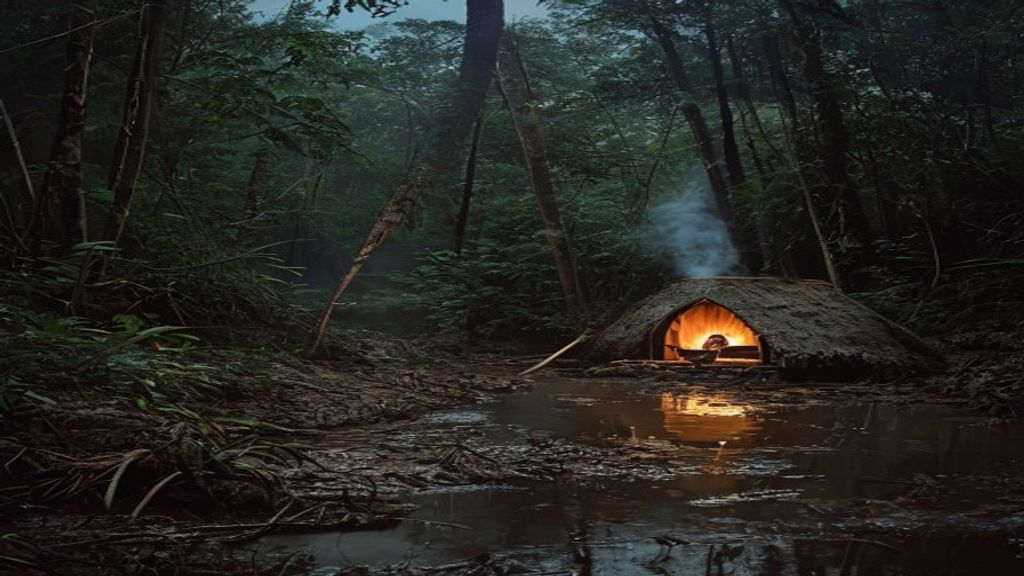
The centerpiece of the impromptu camp is a small, hand-molded mud furnace finished with a smooth coat of red clay gathered directly from local bank deposits. Flanking the furnace are handmade twig racks designed to dry out kindling and tinder. Nearby, the structural foundation for a lean-to shelter sits framed out with sticks, waiting for woven wattle walls, roof thatch, and handmade natural cordage.
However, building a survival shelter from scratch with your bare hands means battling nature every step of the way. The builder reported snapping heavy branches while dodging giant banana spiders suspended in overhead webs, battling swarms of aggressive mosquitoes, and fending off fire ants attempting to harvest the mud furnace to construct their own ant mounds. Local mud dauber wasps have also begun circling the red clay stash, threatening to carry off building materials piece by piece.
Beyond the bug invasions, the site itself faces structural hurdles. The floor of the shelter consists of saturated clay that sinks beneath footwear with every step. Adding to the challenge, the entire project was built on a narrow mud ledge directly adjacent to the water line, with heavy rainfall forecasted in the coming days.
Your brand, right here.Reach story-obsessed listeners in 45+ languages → advertise on AvoneticsOutdoor skill enthusiasts who evaluated the build quickly split into opposing viewpoints regarding the builder's methods and location choices.
Admirers of the project praised the raw resourcefulness of bare-handed crafting. One commenter noted that shaping functional clay furnaces without modern metal tools represents a fantastic hands-on survival milestone. Experienced bushcrafters offered immediate technical solutions, recommending stripped inner bark from native saplings for tough lashings, overlapping tree bark shingles for rainproofing, and a gravel-and-cane floor matting to mitigate the squishy mud.
Critics, however, pointed out severe strategic errors. One experienced adventurer noted that placing a mud-based structure directly on an active creek ledge during a rainy week invites total destruction from sudden flash floods. Others raised environmental concerns, arguing that stripping clay and digging up bank soil inside a river's delicate riparian zone accelerates soil erosion and harms aquatic wildlife habitat.
On the latest episode of Off Grid, our hosts dig into this creekside survival saga, debating whether raw instinct triumphs over backcountry rules when you step into the wild.